
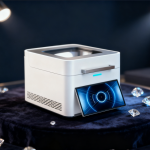
 Xrf Gold Analyzer
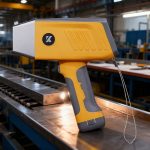 Handheld Alloy Analyzer
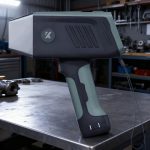 Handheld Mining Analyzer
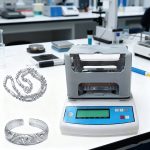 Other XRF Analyzer
Most pawnshop owners view XRF calibration as a periodic chore or a technicality buried in the user manual. This perspective is a direct threat to your bottom line. In a high-volume gold buying environment, your X-ray Fluorescence (XRF) analyzer is the ultimate arbiter of profit. However, these machines are precision instruments subject to the laws of physics, meaning they drift. If your analyzer drifts by just 0.5% to 2% over a six-month period—a common occurrence—you are silently losing money on every single transaction. A drifted analyzer that misidentifies a 14K piece as 13.4K Karat purity might not trigger an immediate red flag, but the cumulative effect is devastating.
In 2026, where gold prices remain at historic highs and margins are under constant pressure from competition, 99.9% accuracy is the only acceptable standard. Calibration is not optional maintenance; it is the cheapest insurance policy you can have on your buy desk. This guide provides a deep-dive into the technical mechanics of XRF drift, the two-tier calibration strategy required for professional shops, and the exact Standard Operating Procedures (SOPs) to ensure every gram of gold you buy is priced with absolute certainty.
A properly calibrated analyzer is the foundation of reliable counterfeit detection. For how to apply a calibrated XRF to spot the five most common fake gold types, see our XRF counterfeit gold detection guide.
Why XRF analyzers drift — the silent margin killer
Every XRF analyzer, regardless of whether it is a $15,000 entry-level unit or a $50,000 high-resolution SDD model, experiences drift. This is not a manufacturing defect; it is a result of the degradation of hardware components and environmental factors. The primary driver is electronic drift within the detector and the X-ray tube. Over time, the X-ray tube’s intensity decays, and the detector’s sensitivity fluctuates. For a standard Silicon Drift Detector (SDD), a typical drift of 1-3% per year is expected if the machine is not regularly standardized.
Thermal cycling is another major culprit. Pawnshops are dynamic environments where air conditioning might be turned off overnight, or the machine might sit near a window or a drafty entrance. Temperature swings cause the internal components of the analyzer to expand and contract at microscopic levels. Even a shift of five degrees Celsius can alter the energy resolution of the detector, leading to a “peak shift” where the machine misinterprets the gold (Au) signal for a neighboring element or miscalculates the Karat weight. Detector aging is also a factor; while SDD detectors generally last 5-7 years, older Si-PIN detectors suffer from faster degradation, requiring more frequent checks.
Consider the real-world math of untreated drift. If your machine has a 1.2% negative drift, you are essentially paying for gold that isn’t there or under-calculating the value of your inventory. In a shop processing 200 transactions per month with an average buy of $300, a 1.2% error results in a $720 monthly silent leak. Over a year, that is $8,640 in pure profit vanishing because of a ten-minute calibration oversight. If you haven’t done a standardization check in 30+ days, you’re flying blind. Drift is cumulative, and by the time it is “obvious,” you have already lost thousands.

Two types of calibration — and why pawnshops need both
Professional gold buyers must distinguish between the two distinct levels of accuracy maintenance: the daily standardization check and the factory deep calibration. Relying on one without the other is a recipe for catastrophic failure or unnecessary service costs. Standardization is a functional check you perform in-house to verify the machine is operating within its expected parameters. It adjusts the software’s interpretation of the detector’s current performance without rewriting the fundamental physics of the machine’s calibration curves.
Factory deep calibration, conversely, is a comprehensive service performed by the manufacturer or a certified technician. This involves recalibrating the fundamental parameters across the entire energy spectrum. Technicians use a wide array of certified reference materials (CRMs) to ensure the machine is accurate not just for gold, but for silver, platinum, palladium, and the various alloying elements like copper and zinc. This service also includes a physical inspection of the X-ray tube and detector health, ensuring the hardware hasn’t reached its end-of-life. For full vendor evaluation context, see our pawnshop XRF buying guide.
| Type | Frequency | Cost | What it fixes | DIY? |
|---|---|---|---|---|
| Daily Standardization Check | Every morning / session | $0 (Free) | Minor electronic & thermal drift | Yes |
| Factory Deep Calibration | 6-12 month interval | $300 – $800 | Hardware decay & curve shifts | No |
| Post-Transport Check | After any machine move | $0 (Free) | Mechanical misalignment | Yes |
The daily standardization check — exact 5-minute SOP
The daily standardization check (often called “Silver Peak” or “System Check” in various software) is the most critical habit for an XRF operator. It ensures that the energy scale of the detector is perfectly aligned with the X-ray tube’s output for that specific day and temperature. Failure to follow a consistent SOP leads to “calibration noise,” where the operator thinks the machine is inaccurate when, in reality, the test conditions were flawed. Document every check. Pawnshop insurance and law enforcement audits often demand calibration logs to prove the validity of your valuations during disputes or claims.
- Power on and warm up: Switch the analyzer on and allow it to idle for at least 10 minutes. This allows the X-ray tube and the detector’s Peltier cooling system to reach thermal equilibrium. Skipping this step is the leading cause of “cold tube” errors, where the first five readings of the day are significantly different from the rest.
- Clean the window: Inspect the testing window for dust, gold flakes, or fingerprints. Use a clean, dry microfiber cloth or compressed air. Never use harsh solvents that could degrade the thin Kapton or Mylar film.
- Position the reference sample: Use a certified reference disk (usually 14K or 18K gold). Ensure the sample is centered over the aperture and sitting perfectly flat. Any gap between the sample and the window will result in a lower count rate and an incorrect Karat reading.
- Run consecutive tests: Perform three 30-second tests. Do not move the sample between these tests. Recording the average of three tests minimizes the impact of statistical variance in X-ray photon detection.
- Verify tolerance: Check the average reading against the certified value of the disk. For a modern SDD machine, the reading should be within ±0.3%. If the disk is certified at 58.5% (14K) and your machine reads 57.9%, it has failed.
- Troubleshoot or flag: If the check fails, re-clean the window and the disk and re-test. If a second failure occurs with a different reference disk (e.g., 18K), immediately flag the machine for factory service and switch to backup testing methods.
What reference samples to use — and what to avoid
The quality of your calibration is only as good as the quality of your reference sample. Many pawnshops make the mistake of using a piece of jewelry that they “know” is 14K because they acid-tested it. This is a logic loop that leads to inaccuracy. For professional XRF calibration, you need NIST-traceable certified reference materials (CRMs). These are metal disks or foils that have been laboratory-certified to have a precise elemental composition. While they cost $200-$500 each, they are the gold standard for legal and financial compliance.
Manufacturer-supplied reference coins are usually acceptable for daily standardization, but they are often less rigorous than NIST standards. If you are a high-volume shop, the recommended kit includes one 14K disk, one 18K disk, and a 24K bullion piece. This allows you to check the machine’s linearity across the most common Karat ranges. For matching reference selection to your karat mix, see matching karat range to your inventory. Avoid using “gold pucks” created from melted scrap unless they have been fire-assayed by a third-party lab; impurities in a homemade melt can create heterogeneous spots that cause the XRF to give inconsistent readings.
Where to buy: For the highest level of certainty, purchase directly from NIST (National Institute of Standards and Technology), or reputable industrial suppliers like Rocky Mountain Reagents or Geller Microanalytical. These suppliers provide certificates of analysis that you can scan into your digital calibration logs, providing an unbreakable chain of custody for your accuracy claims.

When to do factory recalibration — the warning signs
Standardization can only compensate for so much. Eventually, the drift exceeds the software’s ability to “stretch” the calibration curve, or the hardware itself requires adjustment. You should schedule a factory recalibration if your daily check fails two days in a row despite proper cleaning and warm-up. Another major warning sign is “inter-session variance.” If you test the same 18K gold coin on Monday morning and it reads 75.1%, and on Tuesday it reads 73.9%, the machine’s internal stability has been compromised.
Physical trauma is the most common reason for an unscheduled factory service. If a handheld XRF is dropped, or a desktop unit is jolted during a store renovation, the internal geometry of the X-ray tube and detector can shift by fractions of a millimeter. This change in the “optical path” of the X-rays cannot be fixed by daily standardization. Furthermore, if you notice the software log reporting “Detector Temperature Errors” or “High Voltage Arcing,” the machine must be taken out of service immediately. You can often use acid testing as a backup verification: when XRF vs acid testing diverge significantly on multiple pieces, it is a clear indicator that your machine’s detector base-line has drifted beyond the range of DIY correction.

Calibration cost vs ROI — the actual math
Many owners hesitate at the $400-$800 cost of a factory calibration, viewing it as a “loss” on the balance sheet. This is a misunderstanding of the ROI. For a typical US pawnshop processing roughly $60,000 in gold buys per month, the financial risk of an uncalibrated machine is staggering. A 1.2% silent drift—which is visually imperceptible to an operator—results in a $720 loss every single month. By the end of a single year, that drift has cost the shop $8,640.
Investing in a $400 annual factory service plus committing 5 minutes of staff time daily for standardization (which is essentially free) completely mitigates this risk. The net gain for the business is $8,240 ($8,640 saved minus the $400 cost). This represents a 2,060% ROI on your calibration spend. There is no other investment in a pawnshop—be it marketing, security, or staffing—that offers a 2,060% return for such a low capital outlay. For full price-vs-features context, see 2026 gold analyzer pricing guide.
| Financial Metric (Year 1) | Without Calibration | With Calibration |
|---|---|---|
| Monthly Gold Buy Volume | $60,000 | $60,000 |
| Avg. Drift Error (%) | 1.2% (Silent) | 0.05% (Controlled) |
| Monthly Profit Leak | $720 | $30 |
| Annual Cost of Leak | $8,640 | $360 |
| Annual Service Cost | $0 | $400 |
| Net Annual Position | -$8,640 | -$760 |
| Annual Savings | $0 | $7,880 |
Common calibration mistakes that void your accuracy
Even with the right equipment, many operators unintentionally sabotage their calibration results. The most frequent mistake is skipping the warm-up period. A “cold” X-ray tube does not produce a stable flux of photons; as the tube warms up, the count rate changes. If you standardize while the tube is cold, the machine will be “wrong” for the remaining 8 hours of the business day once it reaches its operating temperature. Always wait for the software’s “Ready” or “Stable” indicator.
Testing geometry is another critical pitfall. XRF is a “distance-sensitive” technology. If you standardize using a flat reference disk but then test jewelry that is curved or held at an angle, the results will diverge. You must ensure the reference sample is presented to the detector in the exact same manner as your real-world samples. Furthermore, never ignore software or firmware updates. Manufacturers frequently release “drift compensation algorithms” that are specifically designed to account for known aging patterns in certain detector batches. Finally, never trust “auto-calibration” without physical verification. Many modern machines claim to calibrate themselves internally; while this is a helpful starting point, it does not account for window contamination or external thermal factors.
Calibration & analyzer choice — what matters at purchase
When you are in the market for a new analyzer, the calibration support network should be as important as the price tag. An analyzer that has to be shipped halfway across the world for a 12-month service will leave you without a tool for weeks, forcing you back to inaccurate acid testing. Before buying, ask the vendor for their service center locations in your country and their typical turnaround time. For analyzer architecture comparison, see handheld vs desktop XRF guide.
The detector type also dictates your calibration workload. SDD (Silicon Drift Detectors) are significantly more stable than the older Si-PIN technology. While SDD machines are more expensive upfront, they hold their calibration curve longer and require less frequent “re-standardization” throughout the day. Newer, cloud-connected analyzers can even monitor their own drift in real-time and send an alert to the owner’s smartphone if the machine deviates from its factory-set baseline. For a deeper look at vendor selection, see our complete pawnshop XRF buying guide.
WiserMachine calibration support
At WiserMachine, we understand that a pawnshop cannot afford downtime. That is why we include 12 months of free factory recalibration with every WMK series analyzer. Our systems are built with high-resolution SDD detectors that offer industry-leading stability. Every machine we ship comes with a daily standardization kit, including 14K and 18K NIST-traceable disks, ensuring you have the tools for accuracy from day one. For our flagship WMK800 and WMK1000 models, we provide 24/7 cloud drift monitoring; if our servers detect a shift in your machine’s detector resolution, we proactively reach out to perform a remote firmware adjustment or schedule a service.
Our global service network covers the USA, UK, EU, and UAE, with guaranteed 48-hour turnaround times for calibration services. We also offer on-site calibration for multi-location pawnshop chains, ensuring your entire fleet is synchronized to the same reference standard. If you are experiencing inconsistent readings or have not had your machine serviced in over a year, contact our technical team via WhatsApp at +1 503 381 7860 for a service request or calibration audit.
Calibration log template you can copy
Maintaining a physical or digital log is essential for compliance and quality control. Use the following table structure to track your machine’s performance. Consistent “Pass” results provide confidence to your staff and can be used as evidence in GIA or USPAP audits, which often accept calibrated XRF readings as valid valuation evidence. Conversely, uncalibrated readings can actually void insurance claims if a high-value loss is attributed to an incorrect valuation.
| Date | Operator | Ref. Sample (K) | Reading 1 | Reading 2 | Reading 3 | Pass/Fail |
|---|---|---|---|---|---|---|
| 2026-05-01 | J. Doe | 14K (58.5%) | 58.4% | 58.6% | 58.5% | Pass |
| 2026-05-02 | J. Doe | 14K (58.5%) | 58.3% | 58.4% | 58.4% | Pass |
| 2026-05-03 | S. Smith | 14K (58.5%) | 57.8% | 57.7% | 57.9% | FAIL |
FAQ
1. How often should I calibrate my XRF gold analyzer in a busy pawnshop?
For high-volume shops, a daily standardization check is mandatory every morning before the first transaction. A full factory deep calibration should be performed every 12 months. If your shop processes more than 500 gold transactions per month, consider a 6-month factory interval to account for accelerated X-ray tube wear.
2. Can I calibrate my XRF analyzer myself or do I need to send it to the manufacturer?
You can and must perform the daily standardization yourself using a reference disk. However, you cannot perform a “Full Factory Calibration” yourself. This requires access to proprietary engineering software and a large library of expensive certified reference materials to reset the machine’s fundamental physics curves.
3. What is the difference between standardization and full calibration?
Standardization is a “fine-tuning” of the current energy scale to account for minor shifts like temperature or day-to-day electronic fluctuations. Full calibration is a “complete reset” of the machine’s internal mathematics, involving tests against multiple elements to ensure the detector’s response is linear across the entire spectrum.
4. How much does annual XRF calibration service cost?
Typically, a factory calibration service costs between $300 and $500 for ship-back service. On-site service, where a technician visits your pawnshop, usually costs between $500 and $800 plus travel expenses. While it seems expensive, the ROI in saved gold-buy errors is usually realized within the first month.
5. What happens if my XRF reads gold incorrectly due to drift?
If the machine drifts negatively (reading lower than reality), you will lose deals because your offers will be lower than competitors who have accurate machines. If it drifts positively (reading higher), you will overpay for scrap gold, directly eroding your profit margins. A 1% error can cost a typical shop over $8,000 per year.
6. Do all XRF analyzers have the same calibration intervals?
No. High-end SDD detectors are more stable and can often go 12-18 months between factory services. Cheaper, older Si-PIN detectors are more prone to drift and should ideally be factory-calibrated every 6-9 months to maintain professional-grade accuracy in a pawnshop environment.
7. Will calibration extend the lifespan of my XRF analyzer?
Yes. During a factory calibration, technicians also check the health of the X-ray tube and the cooling system. Catching a cooling fan failure or a tube arcing issue early prevents a catastrophic hardware failure that could cost $5,000 to $10,000 to repair later.
Final recommendation + CTA
The difference between a profitable pawnshop and a struggling one often comes down to the decimals. Implementing a strict calibration regime—combining a 5-minute daily standardization with an annual factory service—ensures your accuracy remains above 99.5%. In the 2026 gold market, this isn’t just a best practice; it is a fundamental requirement for survival. Don’t let silent drift eat your margins while you sleep. Start logging your daily checks tomorrow and schedule your factory service today.
Get a free 20-minute XRF calibration consult + a free reference sample audit for your shop.
Contact our technical team:
WhatsApp: +1 503 381 7860
Email: sales@wisermachine.com
Web: Contact WiserMachine
For more information on optimizing your shop’s performance, see our complete XRF buying & ownership guide for pawnshops.
Related Resources in the Pawnshop XRF Series
- Pillar Guide: Pawnshop Gold Analyzer Buying & Operational Guide
- Cluster 1.1: XRF vs Acid Test for Pawnshops — Which Wins?
- Cluster 1.2: How to Choose the Right XRF Karat Range for Your Pawnshop