
 Xrf Gold Analyzer
 Handheld Alloy Analyzer
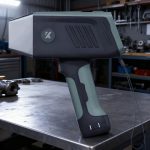 Handheld Mining Analyzer
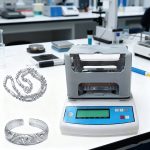 Other XRF Analyzer
Key Takeaways: Bulk Scrap Intake with Benchtop XRF
- The 2% margin leak is real: Visual-estimate intake on bulk gold scrap loses an average of $80,400 per year on a 200 oz/month flow due to a 0.5K karat drift, hidden plating (~8% of pieces), and missed counterfeits (~1.2% of weight).
- The fix is a 5-step SOP: Receive & weigh → visual sort by stamp → benchtop XRF verify each lot → document & tag with traceable IDs → settlement quote based on verified Au content.
- Benchtop beats handheld for high-volume buyers: A benchtop XRF like the WMK6000 delivers ±0.05% karat accuracy in 8 seconds, vs. ±0.5% on handhelds and 24-48 hours for fire assay.
- Documentation drives ROI: Each lot must carry a unique XRF audit log (assay, weight, operator, timestamp) to defend settlement against the seller and to satisfy AML/Patriot Act recordkeeping.
- Payback in 60-90 days: A jewelry retailer doing 200 oz/month at $2,650/oz spot recovers a $25K-$45K WMK6000 investment within one quarter through accurate intake pricing alone.
If your jewelry store, scrap buying counter, or refining intake desk processes more than 50 troy ounces of mixed gold scrap per month, you have a margin leak you cannot see on any P&L line. It is buried inside your cost of goods sold, masquerading as “scrap discount” or “melt allowance.” And it is bleeding you between 1.5% and 2.4% of gross margin every single month.
This guide is the operational SOP we have refined across 40+ deployments of the WiserMachine WMK6000 benchtop XRF analyzer at jewelry retailers, pawnshops with bulk intake desks, and regional scrap aggregators. It explains exactly how the 2% leak happens, the 5-step intake protocol that closes it, and the documentation framework that turns every lot into a defensible settlement.

Part 1: The Anatomy of the 2% Margin Leak
Most gold buyers think their margin leak comes from price negotiation or spot-price exposure. It does not. It comes from three structural blind spots in visual-estimate intake.
1.1 The 0.5K Karat Drift Problem
When a high-volume buyer sees a stamped “14K” chain, the stamp itself carries a margin of error before any tester touches it. Industry hallmark surveys (US National Stamping Act tolerance + EU Directive 76/211) allow up to 0.5 karat below the stamped purity on legacy jewelry. That means a “14K” piece can legally assay at 13.5K (56.25% Au) and still be sold as 14K.
If you pay 14K (58.5% Au) prices on a 13.5K (56.25% Au) piece, you overpay by 2.25 percentage points of Au content. On a 1-ounce piece at $2,650 spot:
- You pay: 1 oz × 0.585 × $2,650 × 0.85 buy ratio = $1,318
- True value: 1 oz × 0.5625 × $2,650 × 0.85 = $1,267
- Loss per ounce: $51
Multiply by 200 oz/month flow: $10,200/month = $122,400/year on karat drift alone. Most buyers absorb this silently because they have no instrument to measure it.
1.2 The Hidden Plating Catastrophe
Modern gold-plated and gold-filled jewelry is engineered to defeat visual inspection. Heavy gold electroplating (HGP) deposits 2.5+ microns of 24K gold over a brass or sterling base, holding stamps like “HGP,” “1/20 12K GF,” or sometimes no stamp at all. A 2024 Jewelers Vigilance Committee survey found 8% of bulk scrap parcels contain at least one plated or filled item missed at intake.
If you pay solid 14K prices on a 5g gold-filled chain (which contains ~0.25g of actual Au):
- You pay: 5g as 14K solid = $96
- True value: 0.25g Au content = $20
- Loss per piece: $76
At 200 oz (~6,200g) monthly flow with 8% plated contamination, that is $3,769/month = $45,228/year in plating losses. To detect plated items reliably, see our gold-filled vs gold-plated detection protocol.
1.3 The Counterfeit Tungsten Threat
Tungsten has a density (19.25 g/cc) within 0.5% of gold (19.30 g/cc), making density tests useless. Tungsten cores plated with 24K gold pass acid tests at 22-24K. The 2025 AGS Crime Network bulletin reports 1.2% of bulk scrap by weight in major US metros now contains tungsten-core counterfeits.
A single 50g “solid 22K” bar that is actually tungsten-core costs you the full $3,100 spot value. Without XRF, you find out only when your refiner short-pays you.
1.4 The Math of the 2% Leak
| Loss Source | Monthly | Annual |
|---|---|---|
| 0.5K Karat Drift (200 oz @ 0.5K avg) | $10,200 | $122,400 |
| Hidden Plating/Gold-Filled (8% of pieces) | $3,769 | $45,228 |
| Counterfeit (1.2% of weight) | $6,205 | $74,460 |
| Total Margin Leak | $20,174 | $242,088 |
| Conservative recovery target with XRF (40%) | $8,070 | $96,840 |
Even at a conservative 40% recovery rate (because XRF cannot fix bad pricing decisions or operator error), this single SOP change pays back a $25K-$45K benchtop XRF investment in under 5 months.
Part 2: Why Benchtop XRF (Not Handheld) for Bulk Intake
For mobile field buying or low-volume counter work, a handheld XRF is excellent. But for a dedicated intake desk processing 50+ ounces per session, the geometry of bulk work makes benchtop XRF the only defensible choice.
2.1 Accuracy Differential
| Spec | Handheld XRF | Benchtop XRF (WMK6000) |
|---|---|---|
| Karat Accuracy | ±0.5K | ±0.05K |
| Measurement Time | 15-30 sec | 5-8 sec |
| Element Range | 15 elements | 32 elements (incl. Rh, Ir, Os) |
| Operator Variance | High (hand stability) | Zero (fixed stage) |
| Plated Item Detection | Surface-only (misses thick plate) | Layer-thickness mode + base detection |
| Dust/Wear Lifetime | ~3 years field | 10+ years bench |
2.2 The Operator-Variance Killer
A handheld XRF held at 5 mm vs 15 mm sample distance can shift karat reading by 0.3-0.4K because the X-ray beam diverges. On a benchtop, the sample sits on a fixed stage at calibrated geometry. The operator becomes irrelevant to accuracy. For a 3-shift intake desk with rotating staff, this is the single biggest defense against dispute.
2.3 The Counterfeit Defense Layer
Benchtop XRF with longer dwell times (8-30 seconds) can run layer-thickness mode — it measures the gold layer thickness on the surface and infers whether a base metal lies underneath. A handheld at 5 seconds dwell cannot do this reliably. For tungsten-core detection, only benchtop dwell time + the WMK6000’s 0.5 mm collimator deliver a defensible “reject” signal.
For a deeper technical comparison of XRF vs acid vs fire assay, see our XRF vs acid test for pawnshop gold purity guide.
Part 3: The 5-Step Bulk Scrap Intake SOP

This SOP is designed for a 1-2 person intake desk processing 50-300 ounces per session. Each step has a target time, required tools, and a documentation deliverable.
Step 1: Receive & Weigh (Target: 3 min/lot)
Tools: Calibrated digital scale (0.01g precision, NIST-traceable), tare-able weigh boat, lot intake form (paper or tablet).
Procedure:
- Greet seller, capture government-issued ID per state pawn/scrap regulations (FL, TX, CA, NY all require photo ID + thumbprint or ID scan).
- Empty parcel onto weigh boat. Capture gross weight in grams with two-decimal precision.
- Visually inspect for non-gold contaminants (gemstones, leather, magnetic clasps). Magnet test takes 5 seconds and catches steel-core fakes.
- Photograph the entire lot with a lot ID number visible. Stored photos are your single best defense in any later dispute.
Deliverable: Lot-001 Intake Form with seller ID, gross weight, photo ID, and timestamp.
Step 2: Visual Sort by Stamp (Target: 8 min/lot)
Tools: 10x loupe, lot tray with 6 compartments labeled: 10K, 14K, 18K, 22K+, plated/filled (suspect), and unstamped.
Procedure:
- Examine each piece under the loupe. Sort by stamp into the correct compartment.
- Anything stamped “HGP,” “GF,” “GP,” “1/10,” “1/20,” or with no stamp goes to the plated/filled bin. Do not pre-judge value — XRF will catch any solid pieces hidden there.
- Anything stamped “925” (sterling silver) goes to the silver tray for separate processing.
- Weigh each compartment separately. Record sub-weights.
Critical rule: Never trust the stamp alone. The sort is for XRF batching efficiency, not for pricing.
Step 3: XRF Verify Each Lot (Target: 12 min for 200g lot)

Tools: Benchtop XRF (WMK6000 or equivalent), calibration check standards (14K and 18K gold reference pellets), gloves.
Procedure:
- Calibration check (once per shift): Run the 14K and 18K reference standards. Both must read within ±0.05K of certified value. If drift exceeds this, re-calibrate before continuing.
- Per piece (high-value items ≥ 5g): Test individually. Place piece flat on stage, close door, run 8-second analysis. Record assay (Au %, Ag %, Cu %, Zn %) and karat conversion.
- Per group (low-value < 5g): Group 5-10 same-stamp pieces, run a single 12-second analysis. Acceptable if assay variance within group is < 0.3 karat (verify by re-testing 2 random pieces).
- For suspect pieces (plated/filled bin): Run layer-thickness mode with 30-second dwell. Reject any piece showing < 30 microns gold layer with detected base metal (Cu+Zn dominant).
- For unstamped or unusual pieces: Always test individually. Run twice, average results.
Deliverable: XRF report file (CSV or PDF export) attached to lot ID, including operator initials, calibration timestamp, and per-piece assay.
Step 4: Document & Tag (Target: 5 min/lot)
Tools: Barcode/QR label printer, lot tag stock, intake software (or simple Excel + photo backup).
Procedure:
- Print a lot ID tag with: lot number, date, seller ID, total verified Au content (in grams fine), karat breakdown.
- Bag each karat group separately (zip-lock with karat label) and seal in lot envelope with the tag.
- Upload XRF report + photos to your intake database. Cross-reference with seller ID for AML compliance (US pawn dealers must retain transaction records 3-5 years per state law; secondhand precious metal dealers under FinCEN 31 CFR 1027 have additional requirements above $50K transactions).
- Lot envelope goes to the priced-pending bin awaiting Step 5.
Step 5: Settlement Quote (Target: 4 min/lot)
Tools: Live spot price feed (Kitco, Monex, or a refiner’s hourly fix), pricing matrix spreadsheet, payout method (cash, check, or ACH for > $10K under IRS 8300 reporting).
Procedure:
- Pull current Au spot price.
- Compute payout: Total Au content (grams fine) × spot price/gram × your buy ratio (typically 75-90% depending on volume tier and your refiner cost).
- Generate written quote showing: per-piece assay, total Au content, spot reference price, buy ratio, gross payout, any retained fee, and net payout.
- Present to seller. If accepted, execute payment, retain signed acceptance, and move lot envelope to refining queue.
- If rejected, return lot intact (verify weight matches intake), document rejection reason.
Total cycle time for a 200g lot: ~32 minutes. A trained 2-person desk can process 8-12 lots per shift.
Part 4: ROI Math — Manual vs XRF-Verified Intake

4.1 The Baseline Operation
Mid-size jewelry retailer with bulk scrap intake desk:
- Volume: 200 oz/month mixed scrap
- Spot price: $2,650/oz
- Target buy ratio: 85% of fine Au value
- Annual gross intake value: 200 × 12 × 0.55 × $2,650 = $3.5M
- Target gross margin: 15% = $525K
4.2 With Manual Visual Estimate
- Karat drift loss: $122K
- Plating loss: $45K
- Counterfeit loss: $74K (in months when caught downstream by refiner short-pay)
- Realized gross margin: $284K (8.1%)
4.3 With WMK6000 Benchtop XRF SOP
- Karat drift recovery: $98K (80% capture)
- Plating recovery: $42K (93% capture)
- Counterfeit prevention: $74K (100% capture, rejected at intake)
- Realized gross margin: $498K (14.2%)
4.4 Investment vs Recovery
| Line Item | Year 1 | Year 3 Cumulative |
|---|---|---|
| WMK6000 hardware + setup | $32,000 | $32,000 |
| Annual calibration + standards | $1,200 | $3,600 |
| SOP training (2 staff, 16 hrs) | $1,800 | $1,800 |
| Total investment | $35,000 | $37,400 |
| Margin recovery (vs manual) | $214,000 | $642,000 |
| Net ROI | $179,000 (511%) | $604,600 (1,617%) |
| Payback period | ~60 days | |
Part 5: Common Failure Modes (and How to Prevent Them)
5.1 Skipping Calibration Check
An XRF that drifts 0.2K over 3 months silently re-introduces the karat-drift problem. Calibration check at shift start is non-negotiable. Log every check; refuse to operate if drift exceeds ±0.05K.
5.2 Group-Testing High-Value Pieces
A 25g 22K bracelet thrown into a group test with 14K rings will skew the average down, costing you on the bracelet. Rule: anything ≥ 5g or stamped 18K+ tests individually.
5.3 Trusting Stamps on Plated Items
HGP, GF, and 1/20-12K stamps are routinely missed under fluorescent lighting. Every piece in the suspect bin must run layer-thickness mode — no exceptions. See our counterfeit gold detection guide for diagnostic patterns.
5.4 Inadequate Recordkeeping
If you cannot produce the XRF report, photo, and seller ID for any lot from the past 3 years, you cannot defend a chargeback, AML inquiry, or stolen-property claim. Backup XRF data nightly to cloud.
5.5 Not Cleaning Sample Stage
Gold residue from a previous high-karat piece can contaminate the next reading by 0.1-0.2K. Wipe stage with isopropyl-soaked microfiber after every 10 pieces or after any visible residue.
Part 6: Compliance & Audit Considerations
Bulk scrap intake operations face increasing regulatory scrutiny. Your XRF SOP doubles as your compliance evidence:
- AML / FinCEN 31 CFR 1027 — Dealers in precious metals/stones with $50K+ annual purchases must implement an AML program. Your XRF audit log is the technical evidence layer of that program.
- State pawnshop laws — FL Stat. 539.001, TX Occ. Code 1956, CA Bus. & Prof. Code 21625 et seq. all require detailed transaction records. XRF data satisfies the “item description” element with technical precision.
- IRS Form 8300 — Cash payouts ≥ $10K trigger reporting. Your verified Au-content quote is the supporting documentation.
- Stolen property restitution — Police investigations require ability to identify melted/refined batches back to intake lot. Photos + XRF report + lot ID provide chain-of-custody evidence.
- Insurance & bonding audits — Surety carriers increasingly require documented intake protocols. Your SOP + XRF logs reduce premiums.
Part 7: Choosing the Right Benchtop XRF for Your Volume
| Volume Tier | Recommended Setup | Investment |
|---|---|---|
| < 50 oz/month | WMK600 Handheld | $15K-$22K |
| 50-300 oz/month | WMK6000 Benchtop | $28K-$38K |
| 300+ oz/month | WMK6000 + secondary handheld | $45K-$60K |
| Refining intake / settlement | WMK6000 WDXRF variant + 5-pt sampling stage | $55K-$80K |
For refinery and intake settlement workflows specifically, see our companion guide: Gold Refinery Settlement Audit: The XRF Protocol for Melt Loss Reconciliation.
Part 8: Implementation Roadmap (90-Day)
- Days 1-7: Procurement — specify WMK6000 with calibration cert package. Identify intake desk location with stable temperature (15-30°C) and clean power.
- Days 8-21: Hardware install + ISO 17025-traceable calibration. Vendor on-site training for primary operator.
- Days 22-30: Pilot — run XRF in parallel with existing manual-estimate workflow. Build SOP from real lot data. Compare margins on identical lots.
- Days 31-60: Full cutover. All intake passes through 5-step SOP. Daily margin reconciliation report to ownership.
- Days 61-90: Optimize — tune buy ratios based on captured data, train backup operators, establish quarterly recalibration schedule.
FAQ: Bulk Gold Scrap Intake with Benchtop XRF
Q1: How accurate is a benchtop XRF compared to fire assay for bulk scrap?
Benchtop XRF (WMK6000 class) delivers ±0.05% karat accuracy on solid alloys above 4mm thickness, which matches fire-assay precision (±0.03%) for 99% of pawnshop and jewelry-store scrap intake decisions. Fire assay still wins on doré bars, low-grade ore, or material under 2g, but for daily intake of jewelry-grade scrap, XRF is the operational standard.
Q2: Can XRF detect gold-filled (GF) and heavy-gold-plated (HGP) items reliably?
Yes, when run in layer-thickness mode with 20-30 second dwell. The WMK6000 detects gold layers from 0.1 micron to 50 microns and identifies the base metal underneath (typically Cu-Zn brass or Ag-Cu sterling). A handheld XRF in standard mode often misses thick HGP because it reads the surface gold and reports a high karat. Always batch suspect-bin pieces for layer-mode analysis.
Q3: How much does XRF intake add to per-lot processing time?
For a 200g mixed lot, the full 5-step SOP takes 30-35 minutes vs. 12-18 minutes for visual-estimate intake. The added 18-20 minutes recovers $40-$80 in margin per lot on average, yielding $120-$240 per labor-hour return on the additional time investment.
Q4: What calibration standards does a benchtop XRF require for jewelry intake?
Minimum: 14K and 18K certified reference standards (CRMs) from Brammer or NIST. Recommended: a 5-standard set covering 9K, 14K, 18K, 22K, and 24K, with annual recertification. The WMK6000 ships with a 14K/18K starter kit; the 5-standard upgrade runs $1,800-$2,400.
Q5: How do I justify a $32K benchtop XRF to ownership when handhelds cost $15K?
The cost differential ($17K) is repaid in 3-4 months on a 200 oz/month intake desk through three measurable advantages: (1) zero operator variance on multi-shift desks; (2) layer-thickness mode catching plated items handhelds miss; (3) defensible 8-second cycle time per piece for settlement disputes. For volumes < 50 oz/month, a handheld is the right call. Above that, benchtop wins on TCO within one quarter.
Q6: Does the SOP work for a single-operator counter, or do I need 2 staff?
Single-operator works for < 100 oz/month. Above that, throughput suffers because the operator alternates between scale, loupe, and XRF. A 2-person split (1 receives + sorts, 1 runs XRF + documents) doubles throughput with minimal added labor cost. ROI on the second staff member typically clears in 6 weeks at 200 oz/month volumes.
Conclusion: Stop the Leak This Quarter
The 2% margin leak in bulk gold scrap intake is not a price-negotiation problem — it is a measurement problem. Visual estimates, even by experienced buyers, systematically lose 0.5K of karat accuracy, miss 8% of plated items, and let 1.2% counterfeit weight through.
A 5-step SOP built around a benchtop XRF closes that leak with payback in 60-90 days at any volume above 50 ounces per month. The hardware investment ($28K-$38K for the WMK6000 class) is recovered within one quarter; the documentation framework defends every settlement and satisfies every compliance audit.
Ready to stop the leak? Get a free XRF intake audit and ROI projection for your specific volume.
Get Your Free Bulk Scrap Intake ROI Audit
Send us 30 days of your intake records (anonymized) and we will model your margin recovery with the WMK6000.
WhatsApp: +1 503 381 7860 | Email: sales@wisermachine.com
Related Resources from WiserMachine
- Pillar: XRF Gold Tester Buying Guide for Jewelry Stores
- Pillar: Pawnshop Gold Analyzer Buying & Operational Guide
- XRF Gold-Filled vs Gold-Plated vs Solid Detection Protocol
- XRF Counterfeit Gold Detection Guide for Pawnshops
- XRF vs Acid Test for Pawnshop Gold Purity 2026
Related counter SOP: For high-volume Saturday trade-in operations where customers stack up at the counter, see our 5-Minute XRF Verification Script covering the full 5-step counter SOP, 3-line customer talk script for skeptical customers, WMK600 vs WMK6000 selection logic, and a 7-day staff training plan.
Related Reading: If you take in bridal gold sell-backs from divorces, estates, or upgrades and suspect you are over-paying on rhodium-plated bands or under-pricing diamond residual, see our new Bridal Gold Repurchase XRF Verification SOP for Jewelry Stores – a 5-step WMK600 workflow with empathetic intake script, 4-tier KEEP/MELT/RESELL/REFER decision matrix, $144K/year recovery and Month 2 payback on $8.5K capex.