
 Xrf Gold Analyzer
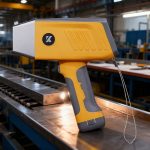 Handheld Alloy Analyzer
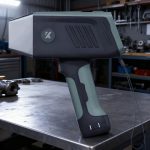 Handheld Mining Analyzer
 Other XRF Analyzer
Gold testers serve as the backbone of trust and profitability for jewelry stores, pawnbrokers, gold recyclers, and mining operations worldwide. The market offers a vast spectrum of options, with prices ranging from less than $100 to over $50,000—each tier delivering distinct detection capabilities, accuracy levels, and usability features. Understanding how price correlates with detection principles, advantages, and limitations is critical for making an informed purchase. A small pawnshop, for instance, has no need for an industrial-grade analyzer costing tens of thousands, just as a large gold refinery cannot rely on a budget handheld device. This article breaks down gold testers into four clear price ranges, explores the science behind each model’s operation, and details the practical pros and cons to help you match the right tool to your business needs. By the end, you’ll recognize which detection technology aligns with your accuracy requirements, budget constraints, and daily usage scenarios.
Entry-Level Gold Testers ($50–$500): Basic Principles For Budget-Conscious Users
Entry-level gold testers dominate the low-cost market, designed for small businesses, hobbyists, and occasional users who prioritize affordability over laboratory-grade precision. These devices rely on simple, time-tested detection principles that require minimal technical expertise to operate. Despite their modest price tags, they deliver sufficient accuracy for basic gold purity assessments—though they fall short when faced with complex alloys or counterfeit materials.
Core Detection Principles Of Budget Gold Testers
Most entry-level models leverage two primary detection methods: density measurement and electrical conductivity testing. These principles capitalize on gold’s unique physical properties to distinguish it from other metals and estimate purity levels.
Density Method: Leveraging Gold’s High Specific Gravity
Gold boasts an exceptionally high specific gravity (19.3 g/cm³), far greater than most common metals used in counterfeits (e.g., tungsten at 19.25 g/cm³, lead at 11.34 g/cm³). Density-based gold testers measure a sample’s weight in air and its weight in water, then use the Archimedes’ principle to calculate density and compare it to known gold standards. Basic models require manual calculations, while mid-range entry-level testers automate the process with a digital display.

Conductivity Method: Measuring Electrical Response
Gold exhibits consistent electrical conductivity that varies predictably with purity—24K gold (99.9% pure) has a higher conductivity than 14K gold (58.3% pure), for example. Conductivity testers emit a low-voltage electrical current through the gold sample and measure how efficiently the current travels. The device then cross-references this reading against a preprogrammed database to display an estimated purity grade (e.g., 10K, 14K, 18K).
Pros Of Entry-Level Gold Testers
Affordability stands as the most obvious advantage; these testers allow small businesses to implement basic gold verification without a significant upfront investment. Additionally, they are incredibly user-friendly—most models feature one-button operation and intuitive displays, requiring no specialized training for staff to master. Portability is another key benefit; handheld designs weigh just 100–200 grams, making them ideal for on-the-go testing (e.g., pawnbrokers visiting clients or jewelry vendors at trade shows). Finally, entry-level testers are non-destructive, ensuring valuable gold items remain unharmed during testing—a critical feature for customer trust.
Cons Of Entry-Level Gold Testers
Accuracy limitations are the primary drawback of budget gold testers. Density-based models struggle to distinguish gold from metals with similar specific gravity, such as tungsten—a common counterfeit material. Conductivity testers, meanwhile, fail to account for alloy compositions; a 14K gold-copper alloy and a 14K gold-silver alloy may yield slightly different conductivity readings, leading to misclassifications. These devices also cannot detect trace impurities or plated metals; a gold-plated brass ring may register as genuine gold if the plating is thick enough. Furthermore, most entry-level testers have slow testing times (30–60 seconds per sample), which can create bottlenecks during peak business hours.

Mid-Range Gold Testers ($500–$3,000): Balanced Accuracy For Growing Businesses
Mid-range gold testers bridge the gap between budget models and professional analyzers, catering to small-to-medium jewelry stores, gold recycling centers, and pawnbrokers with higher testing volumes. These devices incorporate more advanced detection technologies, delivering greater accuracy and versatility while remaining cost-effective. They are engineered to handle common gold alloys and basic counterfeits, making them the most popular choice for businesses that prioritize reliability without the expense of industrial equipment.
Key Detection Principles Of Mid-Range Gold Testers
Mid-range models primarily use two enhanced technologies: low-power X-ray fluorescence (XRF) and improved acid testing with digital analysis. These methods build on basic principles but add precision and automation to reduce human error.
Low-Power XRF: Non-Destructive Elemental Analysis
Low-power XRF (X-ray fluorescence) testers emit a focused beam of low-energy X-rays to excite the atoms in a gold sample. When atoms return to their ground state, they emit characteristic “fingerprint” radiation that the device detects and analyzes. This technology identifies the elemental composition of the sample, including gold and all alloy metals (e.g., silver, copper, nickel), then calculates exact purity as a percentage. Mid-range XRF testers operate at 5–20 kV, making them safe for indoor use with minimal shielding.
Digital Acid Testing: Standardized Chemical Analysis
Traditional acid testing relies on visual color changes to assess purity, but mid-range models digitize this process for consistency. These testers apply a precise drop of acid to the gold sample and use a color sensor to measure the chemical reaction. The device compares the color change to a digital database, eliminating subjective human interpretation. Some advanced models combine acid testing with conductivity measurements for cross-verification, further reducing errors.
Pros Of Mid-Range Gold Testers
Enhanced accuracy is the standout benefit of mid-range testers; XRF models typically achieve an error margin of ±0.1–0.5%, far superior to entry-level devices. They excel at identifying common alloys and plated metals, as X-ray penetration reveals the underlying material. Testing speed is another advantage—most mid-range testers deliver results in 5–15 seconds, making them suitable for busy stores. Many models also offer data logging, allowing businesses to track test results for inventory and compliance purposes. Additionally, these testers are durable; ruggedized handheld designs or sturdy desktop units can withstand daily use in retail environments. Finally, they support a wide range of gold purity levels (8K–24K), accommodating diverse customer items.
Cons Of Mid-Range Gold Testers
Cost remains a consideration, as mid-range testers require a larger investment than entry-level models—though this is offset by their reliability. Low-power XRF testers struggle with very thin samples (less than 0.1mm) or irregularly shaped items, as the X-ray beam may not fully penetrate the material. They also have limitations with trace elements; detecting impurities below 0.01% is often beyond their capabilities, which can be an issue for investment-grade gold. Some models require periodic calibration (every 3–6 months) to maintain accuracy, adding to long-term costs. Finally, desktop mid-range testers lack portability, restricting testing to a fixed location within the business.

Professional-Grade Gold Testers ($3,000–$10,000): Precision For High-Volume Operations
Professional-grade gold testers are designed for high-volume, high-stakes operations such as large jewelry manufacturers, gold refineries, and precious metal trading firms. These devices prioritize laboratory-level accuracy, advanced features, and durability, enabling them to handle complex alloys, rare metals, and sophisticated counterfeits. The investment in professional equipment pays off through reduced errors, increased efficiency, and compliance with industry standards.
Advanced Detection Principles Of Professional Gold Testers
Professional models rely on high-power XRF technology and fire assay (with automated analysis) to deliver unmatched precision. These methods are recognized by international standards bodies for their reliability in gold purity verification.
High-Power XRF: Deep Elemental Analysis
High-power XRF testers operate at 30–50 kV, generating a more intense X-ray beam that penetrates thicker samples and detects a wider range of elements. Unlike low-power models, they can identify trace impurities (as low as 0.001%) and rare metals like platinum or palladium in gold alloys. Advanced sensors (e.g., silicon drift detectors, SDD) process data faster and with greater resolution, distinguishing between elements with similar atomic structures (e.g., gold and mercury). Many professional XRF testers also feature helium purge systems to analyze light elements (e.g., aluminum, magnesium) that standard XRF may miss.
Automated Fire Assay: Destructive But Definitive Testing
Fire assay is the gold standard for gold purity testing, and professional testers automate this traditionally manual process. The device heats the gold sample to high temperatures (over 1,000°C) in a crucible with a flux mixture, which separates gold from impurities. The molten gold is then poured into a mold, cooled, and weighed to calculate exact purity. Automated fire assay testers reduce testing time from hours to minutes and eliminate human error in weighing and calculation.

Pros Of Professional-Grade Gold Testers
Unrivaled accuracy is the primary advantage; high-power XRF and automated fire assay testers achieve an error margin of ±0.01–0.1%, meeting the strict standards of investment-grade gold verification. They handle complex scenarios with ease, including multi-metal alloys, trace impurities, and thick-plated counterfeits. Professional models also offer advanced features like customizable testing protocols (e.g., for specific alloys), integration with inventory management software, and compliance reporting for regulatory bodies (e.g., the London Bullion Market Association). Testing speed is exceptional—high-power XRF delivers results in 2–5 seconds, even for large samples. Additionally, these testers are built for 24/7 operation, with robust components that withstand continuous use in industrial environments.
Cons Of Professional-Grade Gold Testers
The high upfront cost is the most significant barrier for small businesses, with top professional models exceeding $10,000. High-power XRF testers require safety precautions, including dedicated testing areas and operator training to comply with radiation regulations. Automated fire assay testers are destructive, making them unsuitable for valuable or sentimental items like antique jewelry. Maintenance costs are also higher; professional XRF sensors may need replacement every 2–3 years, and fire assay testers require regular cleaning of crucibles and heating elements. Finally, most professional models are large and immobile, requiring dedicated floor space in the facility.
Industrial-Grade Gold Testers ($10,000+): Extreme Precision For Critical Applications
Industrial-grade gold testers represent the pinnacle of gold testing technology, reserved for critical applications where even the smallest error can result in massive financial losses. These devices are used by large-scale gold mines, national mints, and pharmaceutical companies that rely on gold for specialized purposes. They combine cutting-edge detection principles with advanced automation and data integration, delivering results that are legally defensible and internationally recognized.
Cutting-Edge Detection Principles Of Industrial Gold Testers
Industrial models use two primary technologies: inductively coupled plasma mass spectrometry (ICP-MS) and high-resolution XRF with dual sensors. These methods push the boundaries of elemental analysis, detecting elements at the parts-per-billion (ppb) level.
ICP-MS: Ultra-Trace Elemental Analysis
ICP-MS testers vaporize the gold sample using an inductively coupled plasma (a superheated gas at 6,000–10,000°C) and ionize the atoms. The ionized particles are then separated by mass-to-charge ratio using a mass spectrometer, allowing the device to detect and quantify even the smallest traces of elements. This technology can identify over 80 elements in a single test, including impurities like lead, arsenic, and cadmium at concentrations as low as 1 ppb. ICP-MS is the only method recognized by major gold exchanges for certifying 99.999% pure gold (five nines).

High-Resolution XRF With Dual Sensors: Speed And Precision Combined
Industrial XRF testers feature dual sensors (Si-PIN and SDD) that work in tandem to deliver both speed and precision. The Si-PIN sensor provides quick preliminary results (1 second), while the SDD sensor performs a detailed analysis (5–10 seconds) to confirm purity. High-resolution optics separate overlapping spectral lines, ensuring accurate identification of elements with similar atomic numbers (e.g., gold and platinum). These models also include environmental controls to compensate for temperature, humidity, and electromagnetic interference—critical for consistent results in industrial settings.
Pros Of Industrial-Grade Gold Testers
Extreme precision is the defining feature of industrial testers; ICP-MS delivers results that are accepted by every major regulatory body and gold exchange worldwide. They can handle any gold sample type, from raw ore to refined bars, and detect even the most sophisticated counterfeits (e.g., gold-tungsten cores with micro-thin gold plating). Advanced automation allows for unattended operation, with robotic arms loading samples and sorting results for high-volume testing. Data integration is seamless—industrial testers connect to enterprise resource planning (ERP) systems, automatically updating inventory and compliance records. Additionally, these devices offer long-term reliability, with a lifespan of 5–10 years when properly maintained.
Cons Of Industrial-Grade Gold Testers
The cost is prohibitive for all but the largest operations, with ICP-MS systems often exceeding $50,000. They require specialized laboratory facilities with strict environmental controls (temperature, humidity, clean air) to maintain accuracy. Operation demands highly trained personnel with backgrounds in chemistry or metallurgy, increasing labor costs. ICP-MS is also a destructive testing method, limiting its use to non-valuable samples like raw ore or test ingots. Finally, these devices have long lead times for installation and calibration—often 2–3 months from purchase to full operation.
How To Choose The Right Gold Tester For Your Needs
Selecting the optimal gold tester requires balancing three key factors: accuracy requirements, testing volume, and budget. For occasional testing (fewer than 10 samples per day) and basic purity checks, an entry-level conductivity or density tester ($50–$500) will suffice. Small businesses with moderate testing volumes (10–50 samples per day) and a need for alloy detection should invest in a mid-range XRF tester ($500–$3,000). High-volume operations (50+ samples per day) and compliance requirements demand a professional-grade high-power XRF or automated fire assay tester ($3,000–$10,000). Finally, industrial operations with critical purity standards (e.g., mints, large refineries) require an ICP-MS or high-resolution XRF system ($10,000+).
Beyond price and accuracy, consider additional features like portability (handheld vs. desktop), testing speed, data logging, and calibration requirements. Always request a demonstration with your typical samples (e.g., 14K white gold, gold-plated items) to ensure the tester performs as expected. By aligning the device’s capabilities with your specific needs, you’ll invest in a gold tester that enhances efficiency, reduces risk, and builds trust with your customers.
Conclusion: Matching Gold Tester Technology To Your Bottom Line
Gold testers are not one-size-fits-all tools—each price range delivers a unique combination of detection principles, accuracy, and features tailored to specific use cases. Entry-level models offer affordability for budget-conscious users, mid-range testers provide balanced accuracy for growing businesses, professional-grade devices deliver precision for high-stakes operations, and industrial systems offer extreme reliability for critical applications. The key to choosing the right tester lies in understanding your core needs: a pawnbroker testing used jewelry has different requirements than a mint certifying investment-grade gold bars.
Remember that the cost of a gold tester is an investment in risk reduction. A $500 mid-range tester may seem expensive, but it will quickly pay for itself by avoiding a single $1,000 loss from a counterfeit gold item. Conversely, an industrial ICP-MS system is a waste of resources for a small jewelry store with minimal testing needs. By evaluating your daily testing volume, accuracy requirements, and long-term business goals, you can select a gold tester that delivers the best return on investment—ensuring every gold item you buy or sell is verified with confidence.
For refineries seeking both high throughput and precision, WiserMachine offers the WMK600 Handheld XRF Analyzer for field testing and benchtop solutions for lab environments. Compare all models by specification and price in our product catalog, or reference our comprehensive gold tester accuracy guide to select the right detection precision tier for your operation.