
 Xrf Gold Analyzer
 Handheld Alloy Analyzer
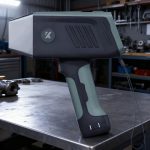 Handheld Mining Analyzer
 Other XRF Analyzer
Key Takeaways
- The 12-skill competency matrix covers riffle splitter mechanics, D80 particle sizing, CRM handling, and spectrum interpretation to eliminate personnel-driven variance.
- A 90-day onboarding pathway transitions staff from shadowing to supervised splitting, followed by solo work with intensive QC and final audit readiness.
- Four certification tiers—Apprentice, Journeyman, Senior, and Lab Lead—align operations with ASTM E456 and ISO 17025 clause 6.2 standards.
- Quarterly blind-CRM proficiency tests enforce a 95% accuracy threshold within ±2 sigma tolerance to maintain assay integrity.
- Hidden costs ranging from $48,000 to $120,000 per year in settlement disputes are often traceable to operator-induced sample contamination during preparation.
- Implementing a formal operator audit program yields a 12-month ROI with a $42,000 initial investment and a Month 5 breakeven point.

Why Operator Audit Matters: The $96K Hidden Loss Channel
Precision in gold refining is frequently compromised by the human element. While a spectrometer provides the final number, the validity of that result depends entirely on the sample splitting operator’s ability to prevent bias.
A poorly trained operator can introduce contamination that shifts a 99.95% purity reading to 99.85% through simple mechanical error. This minor deviation creates significant financial friction during final settlement negotiations between refineries and suppliers.
In 2024, a European refinery faced a $73,000 settlement dispute. The investigation traced the discrepancy to an untrained operator failing to reach the D80 target size, leading to inconsistent homogenization in the final pellet.
Preventing these losses requires a gold refinery settlement audit to identify skill gaps. Without a formal audit, management remains blind to the silent drift in laboratory performance that erodes profit margins.
Auditing the operator ensures every gram of gold is accounted for. Adhering to a refinery gold sample preparation lab SOP 2026 is only possible if the staff possesses the underlying competencies to execute those instructions.
The 12-Skill Competency Matrix
A structured competency matrix is the foundation of a reliable refinery laboratory. This matrix focuses on measurable physical and analytical outputs rather than just years of experience.
We divide these competencies into four distinct clusters. Each cluster represents a critical pillar of the sample preparation and analysis workflow, ensuring no single point of failure goes unmonitored during the audit process.
By quantifying these skills, lab managers can identify specific training gaps. An operator might be excellent at mechanical reduction but lack the discipline required for spectrum interpretation or CRM validation.

| Skill Name | Acceptance Criteria | Measurement Method | Failure Mode |
|---|---|---|---|
| Riffle Loading | 100% chute coverage | Visual observation | Sample bypassing chutes |
| D80 Sizing | <75 µm pass rate | Sieve analysis | Mineralogical segregation |
| Pellet Density | ±0.5% variance | Weight/Height check | Spectrum signal attenuation |
| CRM Storage | <40% humidity | Sensor log review | Chemical degradation |
| Balance Calibration | Zero drift <0.0002g | Daily weight check | Incorrect mass calculation |
| Cleaning Protocol | Blank run <50ppm Au | XRF blank test | Cross-batch contamination |
| Cone/Quartering | Height variance <10% | Manual measurement | Radial segregation |
| COC Log | 100% sign-off rate | Digital log audit | Lost sample traceability |
| Spectrum Reading | Identify 3 peaks | Blind peak test | Penalty element oversight |
| Sieve Maintenance | No mesh tearing | Microscopic inspection | Large particle bypass |
| Pellet Pressing | Surface smoothness | Optical check | Shadowing effects in XRF |
| Waste Disposal | Zero Au in bin | Recovery audit | Revenue leakage |
Skill Cluster A: Mechanical Sample Reduction
Mechanical interaction with a bullion sample occurs during reduction. If an operator fails to master the riffle splitter, the entire assay chain is built upon a biased foundation that no instrument can correct.
Auditors look for a 16-chute load pattern where material is poured in a steady, oscillating motion across the hopper. Dry material requires different handling than slightly moist sludge to prevent bridging within the chutes.
Contamination clearance is the second critical mechanical skill. Operators must perform a vacuum-assisted brush-down between batches and occasionally run a quartz-blank through the splitter to scrub residual gold dust.
When primary mechanical splitters are unavailable, operators revert to the cone-and-quartering method. This technique is prone to errors, particularly when the central cone height varies by more than 10%.
Mechanical auditing also extends to the pellet press. An operator must verify the pressure curve, ensuring a 20-ton press achieves a repeatable sample weight within a ±0.5% tolerance window for every analysis.
Establishing these mechanical baselines is the focus of the refinery gold sample preparation lab SOP 2026. Each mechanical step must be documented and signed off to provide a clear audit trail.
Skill Cluster B: Particle Science Discipline
Particle science discipline ensures the final few grams in the XRF analyzer represent the multi-kilogram melt. Refinery samples are rarely uniform at the microscopic level, often containing varied alloy phases.
The D80 sizing target is the non-negotiable standard. For standard gold refinery intake, particles must be reduced to less than 75 microns to ensure representative X-ray beam interaction without nugget effects.
Sieving validation is used to audit this skill. An operator must achieve the required fineness within the allotted grinding time, adjusting planetary mill parameters based on the material hardness.
Homogenization techniques are also scrutinized. We require a minimum of 20 passes using the cone-and-roll method for pulverized materials. Density verification must confirm that heavier gold particles have not settled.
This discipline is vital when dealing with complex matrices. In a doré bar XRF assay workflow, the presence of silver and copper requires tighter control over particle size.
The audit verifies the cross-contamination protocol. A three-tier process involving vacuuming, alcohol wiping, and a blank CRM run must be performed between every high-purity batch to ensure trace element integrity.
Skill Cluster C: QC Discipline
Quality Control discipline turns technicians into a high-performance laboratory team. This cluster focuses on the unseen work that maintains the long-term validity of the refinery’s data set.
Certified Reference Material handling is the core skill here. Operators must treat CRMs like NIST 685b with extreme care, ensuring storage in temperature-controlled, low-humidity environments to prevent oxidation.
Expiration tracking is a common audit failure point. A skilled operator proactively monitors the shelf life of all standards and schedules new acquisitions before current stock reaches its technical limit.
Chain-of-custody management requires a five-touchpoint sign-off log. This tracks the sample from intake through splitting, grinding, pelletizing, and final analysis, ensuring error isolation to a specific time and operator.
For refineries handling large volumes, the COC must integrate with the gold refinery settlement audit process. If a client disputes a result, the lab must produce the signed COC and the associated retain samples.
Sample preservation is the final QC skill audited. Retain samples must be vacuum-sealed and stored securely. Any degradation in these samples can lead to massive financial liabilities during litigation or arbitration.
Skill Cluster D: Analytical Verification
Analytical verification allows the operator to act as a first-line quality filter. This cluster bridges the gap between physical preparation and data generation, catching anomalies before they reach the final assay.
Precision weighing is the fundamental analytical skill. Operators must master micro-balances, performing daily zero-drift checks and ensuring the laboratory environment is free from vibrations that could skew results.
Cleaning verification is performed analytically. The operator runs a blank CRM and verifies that any carry-over of gold or other precious metals is below the 50 ppm threshold required for high-purity analysis.
Advanced operators are trained in spectrum interpretation. They must visually identify the peaks for XRF penalty element screening, such as lead (Pb), bismuth (Bi), and selenium (Se).
Recognizing these peaks is essential for matrix correction. If an operator notices an unexpected peak, they must know how to adjust the software’s calculation model or flag the sample for secondary chemical analysis.
This analytical layer also includes verifying detector health daily. Operators check the resolution of the manganese K-alpha peak, ensuring the instrument is operating within its optimal spectral width for maximum sensitivity.
4-Tier Certification Framework
A structured career path for lab personnel improves retention and ensures only qualified individuals handle high-value materials. Our 4-tier certification framework provides clear benchmarks for promotion and authority.
The Apprentice level is the entry point, focusing on safety and basic equipment identification. Apprentices are never allowed to perform independent measurements; their work is 100% supervised to prevent early-career errors.
The Journeyman level represents the workhorse of the laboratory. These operators can perform solo splitting and grinding, but final pellets must be approved by a senior before being loaded into the XRF analyzer.
Senior operators possess the authority to make independent technical decisions. They are responsible for training apprentices and conducting the daily equipment checks required by the refinery’s quality management system.
The Lab Lead is the highest tier, acting as the primary signatory for all certificates of analysis. They must be trained as ISO 17025 internal auditors and understand the statistical methods used to validate results.
| Tier | Experience | Primary Authority | Supervision Required | Training Responsibility |
|---|---|---|---|---|
| Apprentice | 0-90 days | Equipment cleaning | 100% Continuous | None |
| Journeyman | 3-18 months | Standard prep/analysis | Periodic audit | Assists Apprentices |
| Senior | 18-36 months | Method validation | Self-directed | Primary Instructor |
| Lab Lead | 36+ months | Final COA approval | External Auditor | Program Director |
90-Day Onboarding Cadence
The first 90 days of an operator’s tenure determine their long-term accuracy and adherence to refinery protocols. A rushed onboarding leads to bad habits that are difficult to correct during later audits.
During Week 1, the emphasis is entirely on shadowing. New hires must learn the physical layout of the lab, safety procedures for handling high-temperature crucibles, and locations of all standards.
From Weeks 2 to 4, the operator begins supervised splitting. Every single batch they process is reviewed by a senior operator, and double-blind QC checks are performed on their output to ensure compliance.

In Month 2, the operator transitions to solo splitting but remains under an intensive QC regime. One CRM is inserted for every 10 samples processed, and any deviation triggers an immediate technical review.
By Month 3, the operator should be audit-ready. This final month includes a mock internal audit and the first quarterly proficiency test, confirming they can join the production rotation as a Journeyman.
| Milestone | Duration | Core Task | Success Metric |
|---|---|---|---|
| Shadowing | Week 1 | Observation & Safety | Safety test pass |
| Supervised Prep | Weeks 2-4 | Riffle & Grind | 100% QC match |
| Transition Solo | Month 2 | Independent Prep | 90% QC pass rate |
| Audit Prep | Month 3 | Full Workflow | Zero contamination |
| Proficiency Test | Month 3 (End) | 5-CRM Blind Test | 95% accuracy |
| Final Certification | Post-90 Days | Journeyman Duties | Sign-off by Lab Lead |
Quarterly Blind-CRM Proficiency Test Protocol
Maintaining high standards requires constant verification. The quarterly blind-CRM proficiency test ensures that operator skills do not degrade over time due to complacency or process drift.
The lab manager disguises five different CRMs as standard production samples. These samples are introduced into the workflow without the operator’s knowledge, ensuring they treat them with the same care as a customer’s gold bar.
The results are compared against a ±2 sigma tolerance window based on the original CRM certificates. A pass threshold of 95% is required for the operator to maintain certification and continue working solo on production samples.
If an operator fails, they are placed on a 30-day remediation program. During this time, they are restricted from high-value analysis and must repeat the training modules related to their specific area of failure.
This approach is mirrored in our xrf slag tailings recovery audit refinery framework. Blind-test logic ensures that total mass balance is accurate and personnel-neutral across waste streams.
ASTM E456 + ISO 17025 Alignment Checklist
Aligning the operator audit program with international standards provides the refinery with legal protection and market credibility. Two key standards form the backbone: ASTM E456 and ISO 17025.
ASTM E456 provides terminology for sampling and statistical analysis. We use these definitions to ensure lab personnel speak the same technical language, reducing the risk of communication errors during disputes.
ISO 17025 clause 6.2 mandates that the laboratory must have procedures for determining competence, selection, and training. We maintain the 12-skill matrix records to fulfill this mandatory requirement.
Further alignment is found in ISO 17025 clause 7.7, which requires monitoring the validity of results through proficiency testing. Our blind-CRM protocol fulfills this requirement while providing data for management reviews.
For high-volume refineries, maintaining ISO alignment is essential for inline xrf toll refining throughput optimization. Standardized operator skills prevent the laboratory from becoming a bottleneck that limits profitability.
| Standard/Clause | Requirement | Compliance Action |
|---|---|---|
| ASTM E456 | Standard Vocabulary | Incorporate terms into training manual |
| ISO 17025 6.2 | Personnel Competence | Maintain 12-skill matrix records |
| ISO 17025 6.2.3 | Training Records | Document 90-day onboarding milestones |
| ISO 17025 6.2.6 | Authorization Matrix | Define 4-tier authority levels |
| ISO 17025 7.7 | Validity of Results | Execute quarterly blind-CRM tests |
| ISO 17025 7.7.1c | Intermediate Checks | Daily micro-balance verification |
| ISO 17025 8.5 | Management Review | Annual skill gap analysis |
| ASTM E135 | Analytical Chemistry | Spectrum interpretation training |
Operator Error Cost Breakdown
Ignoring the human factor in the laboratory is a recipe for financial leakage. Even advanced spectrometers cannot compensate for an operator who allows contamination to enter the sample preparation stream.
By analyzing dozens of refinery audit logs, we identified five primary categories of operator error. These contribute to a cumulative loss ranging from $96,000 to $140,000 annually for a mid-sized refinery.
Splitter contamination is the most frequent issue, occurring when operators skip vacuum-brush steps between samples. While individual errors might cost $1,200, cumulative annual exposure can exceed $32,000 for high-volume labs.
Oversize D80 particles create a medium-severity problem harder to detect without a formal sieve audit. This error leads to mineralogical segregation, resulting in silent bias that can cost a refinery $24,000 per year.
The most catastrophic errors involve mislabeled chain-of-custody documents or CRM neglect. These errors often trigger full-scale settlement disputes and require extensive legal resources to resolve, making them high-severity risks.
To mitigate these risks, lab managers should consult a comprehensive xrf gold refinery purity analysis guide to connect physical preparation errors with specific spectral anomalies.
| Error Category | Annual Frequency | Avg. Dispute Cost | Annual Exposure |
|---|---|---|---|
| Splitter Contamination | 48 instances | $650 | $31,200 |
| Oversize D80 Bias | 24 instances | $1,000 | $24,000 |
| COC Labeling Error | 4 instances | $4,500 | $18,000 |
| CRM Neglect/Drift | 6 instances | $2,000 | $12,000 |
| Spectrum Misread | 2 instances | $15,000 | $30,000 |
Training ROI: $42K Investment, Month 5 Breakeven
Investing in a formal operator training and audit program is often viewed as a soft cost. However, when we quantify prevented losses, the financial justification becomes undeniable for refinery management.
A comprehensive 12-month program typically costs $42,000. This includes instructor salary, depreciation on training equipment, specialized CRMs for proficiency testing, and temporary loss of productivity during training modules.
The return on this investment comes from the reduction in settlement disputes and the elimination of repeat assays. By the fifth month, most refineries have offset the initial program costs through avoided arbitration fees.
Over an 18-month horizon, the net present value of a training program reaches approximately $138,000. This proves personnel competency is as important as hardware, providing a competitive edge for the organization.
This ROI profile is similar to high-precision equipment like the WMK6000 high precision XRF. Both initiatives aim to reduce uncertainty and maximize value recovered from gold bullion batches.

| Month | Cumulative Investment | Prevented Losses |
|---|---|---|
| Month 1 | $15,000 | $2,000 |
| Month 2 | $22,000 | $6,000 |
| Month 3 | $28,000 | $14,000 |
| Month 4 | $32,000 | $28,000 |
| Month 5 | $35,000 | $42,000 |
| Month 6 | $37,000 | $56,000 |
| Month 7 | $38,500 | $70,000 |
| Month 8 | $39,500 | $84,000 |
| Month 9 | $40,500 | $98,000 |
| Month 10 | $41,000 | $112,000 |
| Month 11 | $41,500 | $126,000 |
| Month 12 | $42,000 | $140,000 |
Equipment Pairing: WMK600 vs WMK6000 for Operator Training Stages
Choosing the right equipment for each stage of development is crucial for building technical proficiency. We recommend pairing specific instruments with corresponding certification tiers in the laboratory.
During the Apprentice tier, the WMK600 handheld XRF is the ideal training tool. Its mobility allows apprentices to practice safety protocols and gain experience with initial spectrum reading before moving to benchtop systems.
As operators progress to Journeyman and Senior levels, they transition to the WMK6000 benchtop analyzer. This high-precision instrument is used for production analysis, requiring advanced spectrum interpretation skills for complex gold alloys.
This pairing ensures operators are not overwhelmed early in their careers while providing a clear tech-ladder for them to climb as they earn higher certification levels in the refinery laboratory.
Common Audit Findings & Remediation
Audits reveal process drifts that can lead to errors if left uncorrected. We have categorized eight common findings from our refinery audit logs and their required remediation steps for technical staff.
Case 1 involves minor dust accumulation in riffle splitter chutes. This process drift is corrected with a refresher on vacuum-brush protocols and a requirement for a quartz-blank run every five batches.
Case 2 found balance zero-drift was being recorded but not acted upon. Remediation required a new SOP mandating immediate recalibration if drift exceeds 0.0002 g during daily morning checks.
Case 3 identified sieve mesh integrity was only checked monthly. The new protocol requires microscopic inspection of the mesh before every shift to ensure no large particles bypass the grinding stage.
Case 4 showed CRM storage humidity fluctuating due to a faulty door seal. This was corrected with installation of a digital humidity logger and an automated alert system for the laboratory manager.
Case 5 revealed a structural gap where the chain-of-custody did not include the pellet press operator’s signature. This required redesigning the digital system to ensure 100% personnel accountability.
Case 6 found operators using the wrong matrix correction model for silver-rich doré. Remediation involved a three-day intensive workshop on advanced spectrum interpretation and analytical calibration.
Case 7 identified that 90-day retain samples were not being vacuum-sealed properly. We implemented a new vacuum-packaging station and a monthly audit of the retain inventory to ensure sample integrity.
Case 8 was catastrophic: an operator was found to be fudging D80 sieving data. This resulted in immediate full re-certification for the entire staff and formal notification to all customers affected by the breach.
FAQ
How long does it take to certify a new sample preparation operator?
A new operator typically requires a full 90-day onboarding period to reach Journeyman certification. This includes one week of shadowing, three weeks of supervised preparation, and two months of solo work under an intensive QC regime. During this time, the apprentice must demonstrate 100% adherence to safety protocols and pass a quarterly blind-CRM proficiency test with a 95% accuracy threshold within ±2 sigma tolerance. Rushing this process increases the risk of $48,000-$120,000 in annual settlement disputes due to process drift and uncorrected bad habits. Final certification is granted after a successful mock audit.
What is the most common operator error in refinery sample splitting?
The most common operator error is riffle splitter contamination, accounting for nearly 48 instances per year in a standard refinery. This occurs when an operator fails to perform a thorough vacuum-brush cleaning between batches of bullion, often due to time pressure. While the unit cost is relatively low at $650, cumulative annual exposure can exceed $31,200. This error is remediated through strict adherence to a 12-skill competency matrix that prioritizes mechanical cleaning protocols and blank-run verification. Ongoing audits are essential to ensure these cleaning steps are not being skipped as a shortcut.
How do you measure D80 in the field without a Coulter counter?
In the field, operators measure D80 using a standardized sieve analysis protocol. A representative sub-sample is passed through a 75-micron mesh (for refinery intake) or a 150-micron mesh (for scrap). The operator must demonstrate that at least 80% of the sample mass passes through the mesh within a predetermined vibrating time. Failure to reach this target leads to mineralogical segregation and assay bias, potentially costing $24,000 annually. Senior operators must audit these sieving runs weekly to ensure mesh integrity and that the operator is not using excessive force that could damage the sieve mesh.
Can the WMK6000 spectrum interpretation skill be self-taught?
While basic operation of the WMK6000 is intuitive, advanced spectrum interpretation for penalty element screening requires formal technical training. Operators must be taught to distinguish between overlapping peaks and apply matrix correction models for complex alloys. Self-teaching often leads to an oversight of trace impurities like bismuth or selenium, which can trigger settlement disputes costing upwards of $15,000 per incident. We recommend a 4-tier certification path where senior operators mentor juniors in spectral analysis and the identification of matrix-specific artifacts to ensure that technical knowledge is preserved.
What is the cost of a single mis-split sample?
The cost of a single mis-split sample ranges from $1,200 for minor contamination to over $15,000 for a catastrophic spectrum misread. Beyond the immediate financial loss, a mis-split sample erodes client trust and can trigger a full laboratory audit. In one 2024 case, a single $3,500 bias due to oversize particles led to a $73,000 settlement dispute when the client produced a higher recovery figure. These silent errors are the primary target of our audit program, as they often go unnoticed until they aggregate into a significant discrepancy that necessitates the re-assay of an entire production batch.
How often should operators re-certify?
Operators should undergo a full competency audit annually, supported by quarterly blind-CRM proficiency tests. The annual review aligns with ISO 17025 clause 8.5 management requirements and ensures that no bad habits have developed over the year. If an operator fails a quarterly proficiency test—defined as falling outside the ±2 sigma tolerance for more than 5% of tests—they must undergo immediate 30-day remediation and re-certification before returning to solo production analysis of high-value materials. Regular re-certification ensures that the refinery’s technical baseline remains consistent even as staff turnover occurs in the laboratory.
What documentation does ISO 17025 require for operator competence?
ISO 17025 clause 6.2 requires the laboratory to maintain detailed records for each operator, including educational background, technical training, and authorization levels. This documentation must include a 12-skill competency matrix, records of 90-day onboarding milestones, and results from all quarterly proficiency tests. Refineries must also maintain an authorization matrix that clearly defines who is permitted to perform specific tasks, such as initial sample intake, pellet pressing, or final COA approval. These records must be readily available for inspection during external audits and demonstrate a clear link between training and authorization.
Does CRM proficiency testing need to be blind?
Yes, CRM proficiency testing must be blind to be effective. If an operator knows they are being tested, they are likely to exercise extreme care that does not reflect their daily production performance. By disguising CRMs as standard production samples, the manager gains a true measure of real-world laboratory accuracy. This protocol ensures the 95% pass threshold represents actual quality, preventing the drift that leads to $96,000-$140,000 in annual financial exposure. Blind testing is the gold standard for assessment because it provides an unvarnished view of operational integrity and the consistency of technical personnel.
Build Your Operator Certification Program
Establishing a rigorous operator audit protocol is the most cost-effective way to improve your refinery’s bottom line. By focusing on personnel competency alongside high-precision hardware, you create a laboratory environment immune to process drift and personnel turnover. A certified staff is your refinery’s best defense against the hidden costs of assay variance and settlement disputes.
WiserMachine provides the integrated tools and training frameworks needed to build a world-class refinery lab. From our WMK6000 benchtop analyzers to our expert consultancy on ISO 17025 alignment, we help you eliminate the human errors that cause settlement disputes and revenue leakage. Our approach combines technical expertise with practical training cadences that deliver results for your business.
Contact our technical team today to schedule a consultation on your operator certification program. We can help you implement the 12-skill matrix and 90-day onboarding cadence that will transform your laboratory performance and maximize your gold recovery.
WhatsApp +1 503 381 7860 / Email sales@wisermachine.com