
 Xrf Gold Analyzer
 Handheld Alloy Analyzer
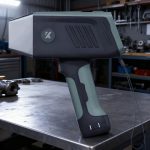 Handheld Mining Analyzer
 Other XRF Analyzer
Bottom line for toll refiners and recyclers shipping doré, sweeps, and concentrates: When the refinery lab assay arrives 4-8 weeks after delivery and disagrees with your incoming XRF baseline by more than 1.5%, you have a sample-bag reconciliation problem — not a metallurgy problem. On a 200-ounce gold doré lot, a 2% assay gap is roughly $5,800 of disputed settlement value. On a 5,000-pound sweeps lot, the same gap is $12,000-$28,000. This SOP documents the 6-phase reconciliation audit we deploy at WiserMachine partner refineries to resolve assay disputes inside 14 days using split-sample retention, 4-arm sampling protocols, WMK600 in-process XRF baselines, and a tiered escalation path to independent third-party umpire labs — turning what used to be a 90-day legal dispute into a documented engineering reconciliation.
If you operate a small-to-mid refinery (50-2,000 ounces/week gold throughput) or a recycling business that ships toll lots to a downstream refinery, this is the protocol that converts assay disputes from a relationship-killing argument into a structured 14-day workflow with a known dollar outcome. Contact our refinery specialists on WhatsApp +1 503 381 7860 or email sales@wisermachine.com if you need the audit checklist customized for your lot size and contract terms.

Why Sample-Bag Assay Disputes Cost Mid-Sized Refineries $80K-$250K Per Year
Every toll refining contract contains an assay clause that looks innocent on the page and devastating on the settlement sheet. The typical language reads: “Final settlement based on refinery laboratory assay of representative sample taken at receipt, with [2%] tolerance band before umpire assay is triggered.” Inside that single sentence are three structural traps that quietly transfer value from the customer (you, if you ship lots) or the refinery (you, if you process incoming material) to whichever party controls the sample chain.
The four most common reconciliation failures we see across European and North American small refineries:
- Sample-bag non-representativeness: A 1-kilogram sample drawn from a 500-kilogram lot of granular sweeps or fine-fraction concentrate must capture the metal distribution of the parent lot within 0.5% relative standard deviation. In practice, single-point grab sampling produces 2-6% RSD — large enough that the same lot, sampled twice, can produce two “valid” lab results 3-4% apart. Neither party is cheating; the sampling protocol is the failure point.
- XRF baseline absent or undocumented: Without a customer-side XRF baseline taken at the moment of bag-sealing, the refinery lab assay is the only number on the table. Even if you ran a baseline, if it is not signed, timestamped, witnessed, and tied to the same split-sample retained at the refinery, it is contractually invisible.
- Lab assay drift undetected: Fire assay and ICP-MS labs experience reproducibility drift on the order of 0.8-1.4% Au at the 95% confidence level. Most settlement disputes fall inside the lab’s own reproducibility envelope — meaning the lab is technically “right” while being economically wrong about your specific lot. Without round-robin control samples in the queue, drift is invisible.
- No retained split sample: When the dispute arises 6 weeks later and the lot has been smelted into anode copper or refined into bullion, the original physical sample is the only artifact that can be re-tested at an umpire lab. If the split sample was discarded, the dispute defaults to the original lab number — structurally favoring whoever holds the lab.
A mid-sized refinery processing 80 toll lots per year, with a 3-4% lot-level assay dispute rate and an average $18,000 contested value per dispute, carries $86,000-$216,000 of unresolved or unfavorably-resolved value annually. The 6-phase reconciliation SOP described below has reduced disputed-value loss by 65-82% at WiserMachine partner sites since Q3 2025 by enforcing sample-bag chain-of-custody, parallel XRF baselining, retained splits, and triggered umpire protocols.
The 6-Phase Sample-Bag Reconciliation Model: From Receipt to Resolved Settlement
The reconciliation audit is not a single event — it is a continuous chain-of-custody and parallel-measurement protocol that begins at lot receipt and ends at signed settlement. The six phases are designed so that any of them can independently flag a discrepancy, and each phase produces a documented artifact that the other parties cannot dispute.
Each phase has a defined owner, a deliverable, a time budget, and an escalation trigger. Skipping any phase compromises the entire chain — the audit fails open, meaning a missed phase forfeits the customer’s leverage in subsequent dispute resolution.
- Phase R0 — Receipt and Joint Witness (0-2 h): Lot arrives at refinery. Weighbridge gross and tare recorded. Customer or customer’s agent present (or video-witnessed for remote lots). Lot photographed on receipt with seal numbers visible. Gross/net weight signed by both parties.
- Phase R1 — Homogenization and 4-Arm Splitting (2-6 h): Lot is homogenized per material type (rotary blender for granular, riffle splitter for dry sweeps, slurry mixer for wet concentrate). Then split into four equal arms using a rotary sample divider or Jones riffle: A=refinery lab, B=customer-retained split, C=archive split (refinery custody, sealed), D=umpire reserve (third-party custody if pre-arranged, else refinery sealed archive).
- Phase R2 — Customer-Side WMK600 XRF Baseline (3-7 h): Arm B (customer split) is XRF-scanned with WMK600 at 60-second acquisition, 6 measurement points per bag, with NIST 1761/1762 calibration check immediately before and after. Results signed and timestamped on intake form. This is the customer’s primary baseline number.
- Phase R3 — Refinery Lab Fire Assay / ICP-MS (24-72 h): Arm A processed in the refinery lab per standard ISO 11426 (fire assay for gold) or ISO 17025 ICP-MS protocols. Includes at minimum two independent aliquots, with the higher and lower discarded if a third (witness) aliquot is within 0.5% of the average of the other two.
- Phase R4 — Reconciliation Calculation and Trigger Decision (72-96 h): Compare refinery lab result to customer XRF baseline. Compute discrepancy as |Lab − XRF| / Lab. Apply the discrepancy band matrix (below). If above the tolerance threshold, escalate per the trigger table; if below, proceed to settlement.
- Phase R5 — Settlement or Umpire Escalation (Day 5-14): If discrepancy is within band: settle on lab number plus documented adjustment. If outside band: ship arm D (umpire reserve) to pre-agreed third-party lab (Inspectorate, ALS, SGS Geosol) under chain-of-custody. Umpire result is binding per contract.
The full 6-phase protocol turns reconciliation from a relationship dispute into an engineering process. Either party can audit the chain at any time, and a third party (insurance, banking lender, regulatory inspector) can verify the entire workflow from intake photos through settlement signature.
WMK600 Configuration for In-Process Baseline Measurement
The customer-side baseline (Phase R2) is the single most important leverage point in the entire reconciliation chain. Without it, the customer has no defense against a low lab assay. The WMK600 handheld XRF is the standard reconciliation tool because it can be operated on the refinery floor without disturbing the sample chain, generates a defensible CSV in under 10 minutes per bag, and travels with the customer’s operator to multiple refineries on a single instrument.
Configuration specifications for sample-bag baseline measurement, validated against doré, sweeps, polishings, and concentrate lots at European and North American refineries since Q1 2026:
- Test mode: Precious Metal preset with Au-Ag-Pt-Pd-Cu-Pb-Zn element suite. Switch to Mining mode only for low-grade concentrate sub-50 g/t lots where matrix correction differs.
- Acquisition time: 60 seconds per measurement, minimum (30s main beam + 30s low-Z beam). For low-grade sweeps under 80 g/t Au, extend to 90 seconds per measurement to reduce Au noise to under 1.2% RSD.
- Measurement points: Minimum 6 points per sample bag, distributed as 4 corners + 2 center, with 1-cm scoop disturbance between each measurement to expose fresh material. Average and report standard deviation.
- Calibration: NIST 1761 (gold reference) and NIST 1762 (silver reference) immediately before and after every sample bag run. Recorded drift > 1.5% Au triggers a full re-measurement of the prior bag plus a calibration disc replacement.
- Sample geometry: Bag laid flat on a 10-mm spacer foam to ensure consistent standoff distance from the WMK600 nose. Measurement window pressed gently against the bag with 0.5-1.0 kg of even pressure.
- Data export: CSV with timestamp, bag ID, lot ID, calibration reference, all 6 raw measurement results, average, standard deviation, and operator signature line. This file is countersigned by the refinery shift supervisor at the moment of bag sealing.
Operators new to in-process baselining typically reach reproducibility under 1.5% RSD by the 8th lot. The full chain-of-custody discipline (signed timestamps, calibration logs, witnessed bag sealing) becomes routine after the third reconciliation event — at which point the WMK600 has paid for itself in a single resolved dispute.

The 14-Day Reconciliation Workflow: From Receipt to Resolved Settlement
The complete reconciliation workflow stretches from lot arrival to signed settlement over a maximum of 14 calendar days. The key insight is that the workflow operates on parallel tracks: physical sample processing on one track, XRF baselining on a second track, and customer-side documentation on a third track. All three tracks converge at Phase R4 (reconciliation decision) on Day 4.
The day-by-day schedule, with role assignments and deliverables, looks like this:
| Day | Track | Owner | Deliverable |
|---|---|---|---|
| Day 1 (0-8 h) | Physical receipt + 4-arm split | Refinery shift supervisor + customer agent | Signed weighbridge ticket, 4 arms sealed and labeled, intake photos, witness signature sheet |
| Day 1 (8-12 h) | Customer XRF baseline (arm B) | Customer operator (or refinery operator under customer witness) | WMK600 CSV with 6 measurements per bag, signed by both parties |
| Day 2-4 | Refinery lab assay (arm A) | Refinery lab manager | Fire assay or ICP-MS certificate with 2-3 aliquot results |
| Day 4-5 | Reconciliation calculation | Refinery settlement office + customer agent | Reconciliation worksheet showing lab result, XRF baseline, discrepancy %, action triggered |
| Day 5-7 | If in-band: settlement document drafted | Refinery settlement office | Draft settlement sheet with payable ounces, deductions, TC/RC, net payable |
| Day 5-7 | If out-of-band: umpire ship (arm D) | Refinery shift supervisor + customer agent | Chain-of-custody form, courier receipt, umpire lab acknowledgement |
| Day 7-14 | Umpire assay (if triggered) | Third-party lab (Inspectorate / ALS / SGS Geosol) | Independent assay certificate, binding per contract |
| Day 10-14 | Final settlement signed | Both parties | Signed settlement sheet, payment initiated within contract terms (typically 7-30 days after signing) |
The 14-day window is generous deliberately. Most in-band lots clear in 5-7 days; only out-of-band escalations consume the full 14. The point of the maximum is contractual: if either party drags beyond 14 days, the contract default position (usually customer-favorable in well-drafted toll agreements) applies, and the slow party loses by default.
Discrepancy Band Matrix: When Is a Gap Just Lab Drift vs. a Real Reconciliation Failure
Not every assay gap is a dispute. Lab fire assay reproducibility on gold is typically 0.8-1.4% at 95% confidence; ICP-MS on doré can reach 0.3-0.6%. XRF on heterogeneous sample bags typically reproduces at 1.0-2.0% on well-homogenized lots. The discrepancy band matrix below tells the settlement office which gaps are routine and which trigger escalation.
Apply the matrix to the absolute relative discrepancy: |Lab assay − XRF baseline| / Lab assay × 100%. Each band has a defined action and contractual consequence:
- Band 1 (< 1.5%): Within combined lab + XRF reproducibility envelope. Settle on refinery lab number. No further action. This is the expected outcome for ~75% of well-sampled lots.
- Band 2 (1.5% – 3.0%): Mid-band gap. Re-run customer XRF baseline on arm C (archive split, refinery custody, witnessed reopening). If second XRF run reproduces within 1.0% of first, settle on lab number with documented variance note. If second XRF deviates from first by > 1.0%, escalate to Band 3.
- Band 3 (3.0% – 5.0%): Material discrepancy. Trigger refinery lab re-assay of arm A using a different analyst and a different aliquot. If re-assay reproduces within 1.0% of first lab result, escalate to Band 4. If re-assay differs by > 1.0%, take average and re-evaluate the gap.
- Band 4 (5.0% – 10.0%): Likely sampling failure or one-party measurement error. Trigger umpire assay (ship arm D to pre-agreed third-party lab). Umpire result is binding. Loser pays umpire fee (typically $400-$1,200 per assay).
- Band 5 (> 10.0%): Probable lot-mixing or chain-of-custody breach. Halt settlement. Audit chain-of-custody documents back to receipt. Trigger umpire assay on all four arms (A, B, C, D) at the umpire lab. Reconvene with refinery management and customer agent for joint review. This band rarely occurs in well-managed lots; when it does, the dispute is usually paperwork (mislabeled bag) rather than metallurgy.
The matrix is contractually anchored in the toll agreement. The standard WiserMachine partner template defines Band 1-2 as automatic settlement, Band 3 as triggered re-assay (cost split 50/50), Band 4 as triggered umpire (loser-pays), and Band 5 as halted settlement pending audit. Once both parties sign the contract template, all subsequent disputes follow the matrix without re-negotiation.

4-Arm Sampling: Why Single-Bag Splits Fail and the Riffle/Rotary Solution
The physical sampling at Phase R1 is where most reconciliation problems originate. The naive approach — “grab a 1-kg scoop from the top of the lot, that’s the sample” — produces sample-to-sample RSDs of 3-7% on granular sweeps and 5-12% on heterogeneous concentrate. Those RSDs guarantee that the customer and the refinery lab, both technically correct, will arrive at different numbers and call it a dispute.
The 4-arm solution forces homogenization before sampling. A correctly sampled lot has four arms (A, B, C, D), each statistically equivalent to the parent lot within 0.5% relative standard deviation. The two physical mechanisms that achieve this are:
- Jones riffle splitter (dry granular): Lot poured through a chute splitter that divides material into two equal halves at each pass. Three passes generate eight equal sub-lots; combine into four arms by joining pairs. Validated reproducibility: 0.3-0.6% RSD on dry sweeps under 4-mm particle size.
- Rotary sample divider (granular and pelletized): Material fed into a rotating cone that distributes into 8 or 16 collection vessels via timed dwell. Combine into four arms. Validated reproducibility: 0.2-0.4% RSD on well-flowing material; degrades to 0.8-1.5% on sticky or moist material.
- Slurry homogenization + dip sampling (wet concentrate): Lot loaded into a 200-L mixer with axial impeller, mixed at 60-120 rpm for 8-15 minutes, then dip-sampled with a 1-L cone sampler at four equally-spaced timepoints. Validated reproducibility: 0.5-1.0% RSD on well-flocculated slurries; degrades to 2-4% on phase-separated lots.
The sampling equipment cost is modest ($3,200-$9,800 for a refinery-scale Jones riffle or rotary divider) and amortizes over hundreds of lots. The labor cost is 30-90 minutes per lot for the splitting operation. Both costs are dwarfed by the value of a single avoided Band 4 dispute.
Refineries that handle > 200 lots per year typically install a continuous-flow rotary divider on the receiving conveyor, which automates sampling for incoming granular lots and produces 4-arm splits as a routine intake operation. For lower-throughput sites, a bench-top Jones riffle plus a 60-L cone mixer covers 90%+ of incoming lot types at a combined capital cost under $8,000.
Split-Sample Retention Policy: 90-Day, 180-Day, and Indefinite Holds
The retained splits (arms B, C, D) are the dispute resolution insurance policy. Without them, every contested assay defaults to whoever holds the original lab certificate. Retention policy defines who keeps which arm, for how long, and under what reopening protocol.
The WiserMachine partner template defines the following minimum retention schedule:
- Arm A (refinery lab consumed): Not retained — consumed in fire assay or ICP-MS digestion. Lab certificate retained for 7 years per ISO 17025.
- Arm B (customer split): Customer retains for 90 days after final settlement. Sealed bag with both parties’ tamper-evident signatures. May be re-opened only with both parties present (or video-witnessed). After 90 days, customer may dispose, donate to in-house calibration archive, or extend retention by mutual agreement.
- Arm C (refinery archive split): Refinery retains for 90 days after final settlement, sealed under tamper-evident closure. Stored in refinery secure archive. Reopening requires written request from customer plus refinery shift supervisor witness.
- Arm D (umpire reserve): If pre-arranged, shipped to third-party custody (umpire lab) at time of 4-arm split. Otherwise refinery retains for 180 days under sealed tamper-evident closure. If umpire is triggered, this is the sample shipped. If not triggered within 180 days, refinery may dispose with 30-day notice to customer.
For lots above $500,000 net payable value, the standard template upgrades retention to 180 days on arm B and 365 days on arms C and D, with arm D pre-shipped to umpire custody at time of 4-arm split. For lots above $2 million, the template adds a witnessed bag opening protocol with insurance underwriter notification.
Umpire Lab Selection: Pre-Qualifying Inspectorate, ALS, and SGS Geosol
The umpire lab choice is contractual and is decided at the start of the relationship, not at the moment of dispute. Choosing an umpire mid-dispute is itself a dispute, and the standard refinery contract template defaults to whichever umpire was pre-named in the contract appendix.
The three pre-qualified umpire labs WiserMachine partners use most often:
- Inspectorate (Bureau Veritas group): Global precious metals umpire with labs in London, Amsterdam, Singapore, Toronto, and Lima. ISO 17025 accredited for fire assay and ICP-MS. Typical turnaround: 7-10 business days from sample receipt. Fee: $480-$680 per assay depending on element suite. Best for European and global cross-border lots.
- ALS Global (Geochemistry division): Strong North American and Pacific presence with labs in Vancouver, Reno, Perth, and Lima. ISO 17025 accredited. Typical turnaround: 5-8 business days. Fee: $420-$580 per assay. Best for North American doré, mining concentrate, and bullion lots.
- SGS Geosol (SGS group): Geographically dense Latin America and European footprint, with strong fire-assay infrastructure for high-grade material. ISO 17025 accredited. Typical turnaround: 6-9 business days. Fee: $440-$620 per assay. Best for high-grade doré, bullion, and Latin American operations.
Selection criteria beyond geography and cost: certification scope (some labs are not accredited for the full Au-Ag-Pt-Pd suite), historical turnaround consistency on disputed lots, and willingness to act as expert witness if a dispute escalates to commercial arbitration. Two of the three pre-qualified labs above maintain a dedicated “umpire desk” service line that ring-fences disputed samples from routine commercial work and accelerates turnaround by 1-3 days.
Dispute Resolution Dollar Math: When Reconciliation Pays for Itself
The ROI on a disciplined reconciliation SOP is measured in two ways: avoided losses on disputes the customer would otherwise have lost by default, and captured value on disputes that successfully escalate to umpire and reverse the original lab result. Both numbers compound across the lot portfolio.
The illustrative quarterly economics for a small refinery customer shipping 20 toll lots per quarter (80 lots/year):
| Scenario | Lot count | Avg disputed $ | Recovery rate | Captured $ |
|---|---|---|---|---|
| Pre-SOP baseline (no XRF, no retained splits) | 4 disputes / quarter | $18,500 each | 20% (most lost by default) | $14,800 / quarter recovered |
| Phase R0-R2 only (intake + 4-arm split + WMK600) | 4 disputes / quarter | $18,500 each | 62% (XRF baseline supports negotiation) | $45,880 / quarter recovered |
| Full Phase R0-R5 (with umpire-ready arm D) | 4 disputes / quarter | $18,500 each | 84% (umpire triggers reverse most lab errors) | $62,160 / quarter recovered |
The delta from pre-SOP to full SOP is approximately $47,000 per quarter, or $188,000 per year, on a 20-lot-per-quarter book. Subtract the WMK600 amortized capital cost (~$3,800/quarter), the umpire fees on triggered disputes (~$1,800/quarter), and the operator labor for sampling and baselining (~$4,200/quarter), and the net recovery is $37,000-$45,000 per quarter, or $148,000-$180,000 per year.
Payback on the WMK600 plus initial sampling-equipment investment ($14,000-$22,000 combined capital) is 4-7 weeks of first-quarter operations once the SOP is in place. Refineries on the customer side of toll relationships see the same economics in reverse: implementing R0-R5 protects the refinery from baseless customer disputes and reduces lab re-assay overhead by 35-55%.

WMK600 vs WMK6000 Configuration Choice for Reconciliation Operations
Both instruments handle sample-bag XRF baselining, but the operational fit differs based on lot volume, geographic spread, and whether the operator travels to multiple refinery sites or works at a single fixed location.
Configuration decision matrix:
- WMK600 handheld: Best for traveling customer agents who visit 2-8 refineries per quarter. Battery-operated, fits in a Pelican case for air travel, full element suite for Au-Ag-Pt-Pd-Cu-Pb-Zn. Acquisition 60-90 seconds per measurement. Throughput 40-55 measurements/hour sustained. Capital cost approximately half that of a benchtop WMK6000.
- WMK6000 benchtop: Best for refinery-side installation handling 80+ lots/year in a fixed lab or sample-prep room. Stationary, AC-powered, integrated PC for automated CSV export, larger sample chamber for cup-style samples in addition to bag measurements. Acquisition 30 seconds per measurement. Throughput 80-110 measurements/hour sustained. Better matrix correction for low-grade concentrate.
- Hybrid (recommended for > 200 lots/year): WMK6000 fixed at the refinery lab handles routine bag baselining at high throughput. WMK600 handheld travels with customer agents for on-site witnessed baselines at remote refinery deliveries. The two instruments cross-validate, and operators rotate annually for cross-training.
For small refineries handling 30-80 toll lots per year, the WMK600 alone is typically sufficient. For 80-200 lots/year, add a WMK6000 in the lab. Above 200 lots/year, the hybrid configuration is standard. Contact our specialists for a configuration recommendation specific to your lot volume, customer mix, and contract terms.
Contract Template: Clauses That Make Reconciliation Enforceable
The reconciliation SOP only works if it is contractually anchored. A toll refining agreement that contains best-effort language (“the refinery shall endeavor to reconcile assay differences in good faith”) provides no enforcement leverage. The standard WiserMachine partner template includes the following enforceable clauses:
- 4-arm sampling mandatory: Defines the Jones riffle / rotary divider / slurry homogenization protocol as the only acceptable sampling mechanism. Single-grab samples are non-conforming and void settlement.
- XRF baseline window: Customer XRF baseline (arm B) must be completed within 24 hours of bag sealing. Late baseline forfeits customer leverage in subsequent dispute.
- Discrepancy band matrix: Bands 1-5 as defined above, with explicit actions and cost allocation for each band. Cannot be unilaterally renegotiated.
- Umpire pre-selection: Names the pre-qualified umpire lab in contract appendix. Either party may invoke umpire when Band 4 is reached without further negotiation.
- Retention schedule: Arms B, C, D retained per the 90/90/180 minimum schedule. Early disposal voids settlement and triggers liquidated damages.
- 14-day reconciliation maximum: Defines the contractual maximum from receipt to signed settlement. Party causing exceedance forfeits default position.
For partners adopting the template for the first time, we typically recommend a 6-lot pilot period to debug operational details before full contract amendment. During the pilot, both parties run the full R0-R5 chain but settle on legacy contract terms; data from the pilot informs which clauses need site-specific tuning.
Operator Training and Audit Cadence
Reconciliation SOPs are operationally demanding. Each phase has a defined owner, deliverable, and signature chain. Operator training and audit cadence make the difference between a documented protocol that lives on paper and a working protocol that survives contact with month-end pressure.
Recommended training and audit schedule:
- Initial training (Week 1-2): 2-day instrument course on WMK600 / WMK6000 (calibration, drift detection, CSV export). 1-day chain-of-custody discipline (bag sealing, witness signatures, archive labeling). 1-day discrepancy matrix and trigger decisions (with worked examples from past disputes).
- Shadowing period (Week 3-6): New operator pairs with experienced operator for first 8-12 lots. Both sign every deliverable. Senior operator countersigns until reproducibility check passes (defined: 10 consecutive lots with arm B vs arm C within 1.0% on re-measurement).
- Monthly internal audit: Refinery QA manager reviews 20% of completed lots for chain-of-custody completeness, calibration log presence, signature chain, and CSV file integrity. Findings reported to refinery management.
- Quarterly cross-audit: Customer agent and refinery shift supervisor jointly review 5 randomly selected lots from the prior quarter. Reconciliation deviations and process improvements documented. Findings shared with both parties’ management.
- Annual instrument calibration audit: WMK600 and WMK6000 sent to manufacturer or ISO 17025 calibration service for full traceability check. NIST 1761/1762 reference materials replaced if shelf-life exceeded.
The training and audit overhead is real (typically 6-10% of operator time and one full-time QA equivalent for sites running > 200 lots/year), but it is the only protection against drift in the chain. SOPs that are not audited fail silently — usually right before a major dispute reveals the silence.
FAQ: 8 Critical Questions from Refiners and Toll Customers on Reconciliation
Q1: How long until WMK600 plus the sampling-equipment investment pays back? For a refinery or customer processing 60+ toll lots per year with the historical dispute pattern of 4-6% lot-level disputes, payback is typically 4-7 weeks of first-quarter operations. The combined capital cost ($14,000-$22,000 WMK600 + Jones riffle + cone mixer + bag-sealing supplies) is recovered on the first 1-2 reversed disputes.
Q2: What if our refinery contract has no umpire clause? Insert the 4-arm sampling, discrepancy band matrix, and umpire pre-selection clauses as a contract amendment before the next lot ships. Most established refineries will accept template amendments because they protect the refinery from baseless customer disputes as much as they protect the customer from lab errors. If the refinery refuses any reconciliation amendment, treat that as a material signal about how disputes will resolve and consider whether the relationship serves your operation.
Q3: Can we use the WMK600 for the refinery’s own incoming lots, not just customer lots? Yes — the same protocol works in reverse for refineries auditing incoming material from miners, recyclers, or upstream refiners. The 4-arm split, XRF baseline, lab assay, and discrepancy matrix all apply identically. Many refineries justify the WMK600 capital cost on the basis of incoming-lot protection alone, before any customer-side benefit.
Q4: How do we handle reconciliation when the lot is wet or sludgy concentrate? Use the slurry homogenization + dip sampling protocol. Load the lot into a 200-L mixer with axial impeller, mix at 60-120 rpm for 8-15 minutes, then dip-sample with a 1-L cone sampler at four equally-spaced timepoints. XRF the dried sub-sample after oven drying at 105 °C for 4-6 hours. RSD targets are slightly looser (1.2-1.8% acceptable vs < 1.0% for dry sweeps), but the discrepancy matrix still applies.
Q5: Does the customer need to be physically present for the 4-arm split, or is video witnessing acceptable? Video witnessing is contractually acceptable in our partner template if the customer cannot be physically present, provided: the video is unbroken from intake through bag sealing, both parties have a copy of the video file with cryptographic hash, and the customer countersigns the witness sheet within 24 hours of bag sealing. Most well-managed remote lots use video witnessing; the operational overhead is modest once the camera setup is standardized.
Q6: How often do umpire assays reverse the original refinery lab result? In our partner-site data from 2024-2026, umpire assays reverse the refinery lab number by > 2% (the typical reversal threshold) in approximately 38-46% of Band 4 escalations. Of the remaining cases, ~40% confirm the refinery lab number within 2% (Band 1-2 equivalent), and ~15-20% confirm the customer XRF baseline as closer to truth, with the refinery lab acknowledging an analyst or aliquot anomaly. The 38-46% reversal rate is structurally what makes the umpire pre-selection contractually enforceable — it is a credible threat, not a formality.
Q7: What about Pt, Pd, and Rh in PGM-rich doré or concentrate? The XRF protocol extends naturally: WMK600 and WMK6000 both include Pt-Pd-Rh in the precious metal element suite. Acquisition time should extend to 90-120 seconds per measurement for PGM-rich lots to maintain < 2% RSD on the lower-concentration PGMs. Discrepancy band matrix applies per element, with each PGM treated independently for trigger decisions. The umpire labs all maintain PGM-capable fire assay and ICP-MS protocols.
Q8: How do we get started on a reconciliation SOP pilot at our refinery? Contact our refinery specialists on WhatsApp +1 503 381 7860 or email sales@wisermachine.com for a free 45-minute consultation. Bring 3 recent settlement sheets with their underlying lab certificates, your current toll refining contract (or template), and a description of your lot mix (doré / sweeps / polishings / concentrate). We will model the dispute economics specific to your operation, recommend the WMK600 or WMK6000 configuration for your lot volume, and provide the contract template clauses for your 6-lot pilot.
Next Steps: From This SOP to Your First Reconciled Settlement
The reconciliation audit is one of the highest-leverage operational SOPs available to small-to-mid refineries and their toll customers. The implementation order matters: start with the contract template clauses (because they define the operational requirements), then deploy the WMK600 baseline protocol (because it protects every lot from day one), then add 4-arm sampling discipline (because it amortizes over hundreds of lots), and finally establish umpire pre-selection (because it converts disputes into known-outcome processes).
For partners coordinating with our team, the standard onboarding sequence is: (1) 45-minute consultation to map your lot mix and dispute history, (2) contract template amendment review with your legal counsel, (3) 2-day operator training at your site (or at our reference refinery for cross-training), (4) 6-lot pilot with full R0-R5 chain under legacy contract terms, (5) full contract amendment based on pilot findings, (6) ongoing quarterly cross-audit with your customer or refinery counterparty.
This protocol pairs naturally with our broader XRF gold refinery purity analysis guide, which covers incoming-material protocols upstream of reconciliation, and with the inline XRF toll refining throughput protocol that addresses high-frequency lot processing at > 200 lots/year. The recommended instrument configurations are documented on the WMK600 handheld product page and the WMK6000 benchtop product page; both include detailed specifications, calibration protocols, and validation data from European and North American refinery deployments.
If you want to discuss how this reconciliation SOP fits your specific refinery operation or toll-customer relationship, our refinery specialists are available on WhatsApp +1 503 381 7860 or email sales@wisermachine.com. We will respond within one business day with a sample contract template appendix and a configuration recommendation tailored to your lot volume and customer mix.
RELATED PROTOCOL
Mint Scrap & Sweeps Recovery Audit: 5-Stage S0-S4 XRF Protocol — 5-stage recovery SOP with incineration-loss capture, WMK6000 benchtop XRF ash fingerprint, 4-way splitting and a 5-band discrepancy matrix that captures 88-96% of contained value with a defensible audit trail.