
 Xrf Gold Analyzer
 Handheld Alloy Analyzer
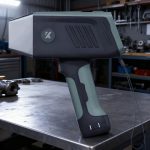 Handheld Mining Analyzer
 Other XRF Analyzer
An XRF report can total 100 percent because the software normalizes the elements included in the selected method. That total is not proof that every constituent was measured. Light elements outside the method, an unmodeled coating or substrate, sample geometry, spectral overlap and reporting thresholds can all affect what appears in the composition table. Review the method, raw spectrum and normalization settings before treating the total as a complete material balance.

Quick answer
| Decision | why xrf results total 100 percent |
| First check | Confirm sample construction, geometry, target elements and the exact business decision. |
| Before quotation | Send clear sample photos with dimensions, daily volume, destination, voltage and reporting needs. |
Understand what the 100 percent total means
- Many quantitative methods scale the reported element concentrations so the selected set adds to 100 percent.
- The calculation may assume a sufficiently thick, uniform and representative sample even when a real item is curved, layered or heterogeneous.
- Elements not included in the method, below the reporting threshold or difficult for the configuration may not appear as a separate row.
- A neat total therefore describes the software model, not necessarily every physical constituent in the object.
Check for missing or distorted information
- Confirm which elements the active method measures and whether an unmeasured balance or fixed compound is assumed.
- Inspect the spectrum and fit quality when an unexpected grade or trace element changes the commercial decision.
- Separate bulk-alloy testing from coatings, solder, hollow items and mixed components because one normalized result cannot describe multiple layers reliably.
- Compare a suitable matrix-matched reference under the same method, test time, position and sample preparation.
Use a defensible buyer review
- Retain the unrounded element table, method name, software version, test time and exact test location.
- Ask the supplier whether normalization can be viewed or disabled and how nonreported elements are handled.
- Repeat representative points rather than averaging unlike areas into one apparently precise result.
- Escalate high-value, borderline or disputed material to the agreed confirmatory method.
Practical decision table
| Sample or condition | Action | Reason |
|---|---|---|
| Total is exactly 100% | Review normalization settings | May be a reporting convention |
| Expected element is absent | Check method and spectrum | Could be excluded or below threshold |
| Curved or layered item | Test representative zones separately | Geometry and layers affect the model |
| Borderline commercial result | Hold and confirm | Do not rely on the total alone |
Evidence and method boundary
Use the model manual, an approved method and suitable reference materials before making purchase, release or compliance decisions. Technical references include the HORIBA XRF analysis theory, Hitachi fundamental-parameters assumptions. These sources explain the method boundary; they do not replace model-specific configuration, laboratory confirmation or local legal advice.
Recommended WiserMachine path
Review WM3600S and compare WM-EDX-B6. The exact detector, collimator, calibration, software and reporting configuration must be confirmed against real samples before ordering. You can also browse the complete XRF product catalog.
Related guides
Continue with XRF spectral overlap and matrix effects, XRF measurement uncertainty, or use the support center for preparation, operation and service guidance.
Confirm how your XRF method handles the 100 percent total
Send sample photos, dimensions, target elements, expected range, daily volume, reporting needs, voltage and destination. WiserMachine will confirm a suitable configuration and freight plan before quotation.
Frequently Asked Questions
Does a 100 percent XRF total prove the sample contains no other elements?
No. It may be a normalized total for the elements included in the method.
Can normalization make a result wrong?
Normalization is a valid calculation when its assumptions match the sample, but it can make omitted constituents less obvious if the method boundary is not understood.
What should I request from the supplier?
Request the element list, calibration scope, normalization behavior, reporting thresholds and a representative-sample validation report.