
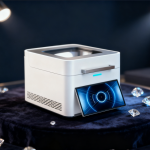
 Xrf Gold Analyzer
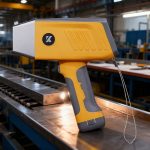 Handheld Alloy Analyzer
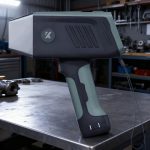 Handheld Mining Analyzer
 Other XRF Analyzer
An XRF detection limit is not one universal number for an analyzer. It changes with the target element, sample matrix, measurement time, spot size, filter and tube conditions, detector performance, spectral interference, preparation and statistical definition. Buyers should request performance on representative samples under stated conditions and agree an acceptance test instead of comparing isolated brochure ppm claims.

Quick answer
| Decision | xrf detection limits precious metals |
| First check | Confirm sample construction, geometry, target elements and the exact business decision. |
| Before quotation | Send clear sample photos with dimensions, daily volume, destination, voltage and reporting needs. |
Ask what the quoted limit actually means
- Identify whether the value is an instrument detection limit, method detection limit, screening threshold or reporting limit.
- Require the target element, matrix, concentration units, confidence calculation and test time beside every number.
- Check whether the result came from an ideal blank or prepared standard rather than your curved, coated or mixed real sample.
- Do not compare limits from different matrices as if detector sensitivity were the only variable.
Understand the main performance variables
- Longer measurement can improve counting statistics, but gains diminish and throughput falls.
- A larger well-filled spot can collect more useful signal than a small spot that partly sees air or a holder.
- Overlapping spectral lines and high concentrations of other elements can raise practical limits or create false positives.
- Surface condition, thickness, homogeneity and preparation affect the method even when the hardware is unchanged.
Write an acceptance test before ordering
- Provide blind samples spanning below, near and above the business decision level.
- Define replicates, allowed false-positive and false-negative handling, reporting units and pass criteria.
- Run the exact ordered detector, method, spot and test time rather than a different demonstration configuration.
- Retain raw spectra, sample photos and reference values so failures can be investigated.
Practical decision table
| Sample or condition | Action | Reason |
|---|---|---|
| Brochure LOD | Check matrix and conditions | May reflect ideal sample |
| Real jewelry part | Validate geometry and interference | Practical performance differs |
| Short test time | Measure precision near decision | Fast may be insufficient |
| Procurement sign-off | Use blind acceptance samples | Turns claim into evidence |
Evidence and method boundary
Use the model manual, an approved method and suitable reference materials before making purchase, release or compliance decisions. Technical references include the Evident Vanta gold analysis note, Hitachi XRF detection-limit and spot-size technical note. These sources explain the method boundary; they do not replace model-specific configuration, laboratory confirmation or local legal advice.
Recommended WiserMachine path
Review WM5800T and compare WMEDS6000T. The exact detector, collimator, calibration, software and reporting configuration must be confirmed against real samples before ordering. You can also browse the complete XRF product catalog.
Related guides
Continue with XRF test-time selection, XRF collimator and spot-size selection, or use the support center for preparation, operation and service guidance.
Validate performance before comparing quotations
Send sample photos, dimensions, target elements, expected range, daily volume, reporting needs, voltage and destination. WiserMachine will confirm a suitable configuration and freight plan before quotation.
Frequently Asked Questions
Is a lower published LOD always a better analyzer?
No. The number must be relevant to the target element, matrix, method and business decision, and it must be reproducible on the ordered configuration.
Does doubling test time halve the detection limit?
Not as a universal rule. Counting statistics may improve, but matrix, interference, geometry and systematic effects remain.
What should buyers send for a detection-limit evaluation?
Send representative matrices, target elements, decision concentrations, sample geometry, required throughput and independent reference values.