
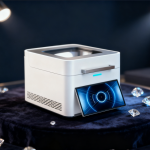
 Xrf Gold Analyzer
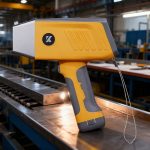 Handheld Alloy Analyzer
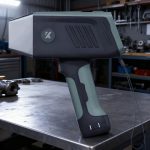 Handheld Mining Analyzer
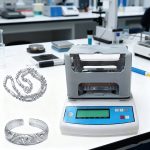 Other XRF Analyzer
XRF vs Acid Test for Pawnshops: Which Method Wins in 2026?
Every pawnshop owner knows the sinking feeling of discovering a “heavy” 18k chain in the melt bucket is actually a tungsten-core counterfeit. In the high-stakes environment of 2026, where sophisticated “super-fakes” circulate through every major city in the USA and EU, the difference between a profitable buy and a $2,000 loss often comes down to the testing method used at the counter. For decades, the acid scratch test was the undisputed king of the pawn industry, valued for its low entry cost and simplicity. However, as jewelry manufacturing techniques evolve and customer expectations for transparency rise, the limitations of traditional chemical testing are becoming a liability.
The choice between X-ray Fluorescence (XRF) and acid testing is no longer just a matter of preference; it is a critical operational decision that affects your bottom line, your reputation, and your legal protection. While one method relies on subjective color changes and surface-level chemical reactions, the other provides a non-destructive, lab-grade elemental breakdown in seconds. This article analyzes the data, the ROI, and the technical realities of both methods to determine which testing protocol truly wins for modern pawn operations.
How each method actually works

Before comparing the two, it is essential to understand the fundamental physics and chemistry at play. Testing gold is essentially the process of verifying the ratio of gold to base metals in an alloy, and these two methods approach that problem from opposite ends of the technological spectrum.
Acid Test — The 200-Year-Old Method
The acid test, also known as the touchstone method, relies on the principle that gold is a noble metal and does not react to most acids. To perform this test, a pawnbroker scratches the jewelry piece against a basalt touchstone, leaving a visible “streak” of metal. A drop of nitric acid (or a mixture of nitric and hydrochloric acid for higher karats) is then applied to the streak. The operator observes the reaction: if the streak remains, the gold is at least the karat indicated by the specific acid used (e.g., 14k acid). If it dissolves or changes color significantly, the gold content is lower.
This method is inherently destructive. Even a “light” scratch removes a microscopic layer of the customer’s property, which can lead to disputes if the item is later redeemed. Furthermore, it only identifies the karat in “steps” (10k, 14k, 18k, 22k). It cannot tell you if a 14k ring is actually 14.2k or 13.8k, nor can it identify the other 41.7% of the alloy—information that is vital for accurate scrap valuation. The process typically takes 3 to 5 minutes per piece, depending on the number of stones used.
XRF Analyzer — The Modern Standard
XRF (X-ray Fluorescence) operates on the principle of atomic spectroscopy. When an XRF analyzer is triggered, it emits a low-power X-ray beam into the sample. This beam “excites” the atoms in the jewelry, causing them to emit secondary (fluorescent) X-rays. Because each element has a unique “fingerprint” or energy signature, the analyzer’s detector can identify exactly which metals are present and in what precise percentages. This is the same technology used in mining and environmental laboratories, now shrunk down into desktop and handheld units designed for retail environments.
The primary advantage here is that XRF is completely non-destructive. Nothing is scratched, and no chemicals are applied. Within 30 seconds, the screen displays a full breakdown: Gold (Au), Silver (Ag), Copper (Cu), Zinc (Zn), Nickel (Ni), and even trace elements like Iridium or Ruthenium that are often used in fakes. This digital output removes the guesswork and provides a “receipt” of accuracy that builds immediate trust with the seller. For a deeper look at the hardware, see our complete pawnshop buying guide for 2026.
Side-by-side comparison: 8 real-world factors
For a pawnshop manager evaluating a capital expenditure, the decision often comes down to how these tools perform during a busy Saturday rush. Below is a direct comparison of the operational realities of both methods.
| Factor | Acid Scratch Test | XRF Analyzer |
|---|---|---|
| Test Speed | 3–5 minutes including setup and cleanup. | 10–30 seconds for a full result. |
| Accuracy | Subjective; typically ±1 karat (4.1% variance). | Objective; typically ±0.01% to 0.1% accuracy. |
| Karat Range | Fixed steps (10k, 14k, 18k, 22k); struggles with 24k. | Continuous 0–24k; detects all alloy variations. |
| Destructiveness | Destructive; leaves physical scratches on the piece. | Non-destructive; no marks or chemical residue. |
| Operator Skill | High; requires training to “read” acid reactions. | Low; point-and-shoot with digital results. |
| Customer Trust | Low; customers hate seeing their jewelry scratched. | High; digital screens provide lab-grade authority. |
| Documentation | Manual logging; prone to human error. | Digital records; prints/saves receipts and photos. |
| Safety/Waste | Requires handling corrosive acids and stone cleanup. | Safe X-ray shielding; no chemical waste. |
Why acid testing costs pawnshops money in 2026

The “low cost” of acid testing is an illusion. While a bottle of testing solution costs less than $10, the hidden costs of relying on this method can cripple a modern pawn operation. The most significant financial drain is the customer dispute risk. In an era where every customer has a smartphone, watching a pawnbroker scratch a family heirloom with a stone is a negative experience. If the acid test is wrong and you offer a lower price, or if the customer sees the scratch and decides not to sell, you have lost both a transaction and a reputation.
More dangerously, acid testing is fundamentally incapable of detecting the “super-fakes” that have become rampant since 2020. A tungsten-core gold bar or a thick-plated 14k brass chain will pass a standard acid test every time because the acid only reacts with the surface layer. If your shop only tests the surface, you are essentially inviting counterfeiters to target your business. A 2024 industry survey of over 500 pawnshops in North America revealed that stores relying solely on acid testing lost an average of $3,000 to $7,000 per year to misjudged gold transactions. These losses alone would have paid for a mid-range XRF unit in under two years.
Additionally, acid testing fails to account for the value of other precious metals. If a customer brings in a piece of white gold that is actually 10k gold but contains 15% palladium, the acid test will tell you it’s 10k, but it won’t tell you about the $50 worth of palladium hidden in the alloy. You end up under-quoting the customer or losing out on the refining margin. For a more detailed analysis, read about the top pawnshop gold verification challenges facing the industry today.
Where acid testing still has a place
Despite the technological superiority of XRF, we should be honest: acid testing is not going to vanish entirely in 2026. It remains a valuable supplemental tool for specific scenarios. For instance, in field appraisals—such as an estate buy-out at a customer’s home—carrying a $10,000 XRF analyzer might not always be practical or safe. A small acid kit in a briefcase provides a quick, portable baseline for initial offers.
Acid testing also makes sense for sub-$50 transactions. If a customer is pawning a single broken 10k earring with a scrap value of $30, the 30 seconds of electricity and tube life of an XRF analyzer might technically be more “expensive” than a quick scratch on a stone. Finally, many veteran pawnbrokers use acid as a secondary verification. If an XRF result seems “off” due to a strange alloy mix, a quick acid drop can provide a “sanity check” to confirm the presence of gold. However, these are exceptions. For 95% of a shop’s volume, XRF is the necessary primary method.
Real ROI math: switching from acid to XRF
Let’s look at the numbers for a typical mid-sized pawnshop processing 80 gold transactions per month. The financial case for upgrading to a 2026 XRF analyzer is often clearer when viewed as a multi-year investment.
The Cost of Acid Testing:
- Acid & Stone Supplies: $0.50 per test × 80 = $40/month
- Staff Labor: 4 minutes per test × 80 = 320 minutes. At $20/hr, this is ~$107/month.
- Counterfeit/Error Losses: Industry average of 1 “bad buy” per quarter at $400 = $133/month.
- Total Monthly Cost: ~$280 (or $3,360 per year)
The Cost of XRF (Mid-Range $8,000 Unit):
- Operating Cost: Negligible electricity/tube wear (approx. $0.10 per test) = $8/month.
- Staff Labor: 30 seconds per test × 80 = 40 minutes. At $20/hr, this is ~$13/month.
- Counterfeit/Error Losses: Near zero (XRF detects tungsten and plating).
- Total Monthly Cost: ~$21 (excluding depreciation)
In this scenario, the shop saves roughly $259 per month in operational costs and avoided losses. Over a 3-year period, that is $9,324 in savings—more than the cost of the machine itself. When you factor in the increased volume from faster transactions and the higher “close rate” that comes with professional digital testing, the payback period is typically 9 to 12 months. For a breakdown of current market pricing, see our global gold analyzer price and purchasing guide for 2026, and walk through model-by-model selection in the ultimate XRF buying guide for pawn operations.
Counterfeit detection: the acid test blind spot
The most dangerous threat to a pawnshop in 2026 is the “blind spot” created by surface-only testing. Modern counterfeiters are experts at bypassing acid. They create “sandwiched” items where a thick 14k gold shell (often 50-100 microns thick) covers a core of tungsten or brass. Because acid only penetrates the first few microns of the surface, it reports a “Pass” for 14k gold.
XRF analyzers are significantly more effective because the X-rays penetrate deeper into the material—typically 20 to 50 microns depending on the voltage. While this still doesn’t see through a 1oz gold bar, it is more than enough to detect the “spectral interference” caused by base metal cores in jewelry. Furthermore, XRF can detect the specific “signature” of prohibited or dangerous metals like Cadmium or Lead, which are often found in low-quality overseas fakes. By providing a full elemental list, XRF alerts the pawnbroker to the presence of any metal that shouldn’t be there, such as an unusual amount of Zinc or Nickel used to mask a fake’s weight. This level of security is simply impossible with a bottle of nitric acid. To stay ahead of these threats, consult our guide on pawnshop gold verification challenges.
When to choose XRF specifically for pawnshop operations
While almost every shop will benefit from XRF, it is a non-negotiable requirement for three specific types of businesses. First, high-volume buy-back desks. If you are processing more than 3-4 gold transactions a day, the time savings alone will allow your staff to focus on more complex loan negotiations rather than cleaning testing stones. Second, stores located in college towns or near military bases. These areas are frequently targeted by itinerant scammers selling high-quality fakes; having a “digital gatekeeper” at the counter is the best deterrent.
Third, pawnshops in states with strict consumer protection laws. In many jurisdictions, any physical damage to a customer’s item—even for testing purposes—can be grounds for a legal claim if not documented perfectly. XRF removes this liability entirely. Whether you choose a handheld unit for flexibility or a desktop “box” for maximum shielding and customer visibility, the transition to digital testing is a hallmark of a professional operation in 2026. You can compare the two formats in our handheld vs desktop XRF buying guide.
FAQ
1. Is XRF more accurate than acid test for gold karat?
Yes, significantly. An acid test is a “pass/fail” method based on human observation of a color change, which is subjective and limited to fixed karat intervals. An XRF analyzer provides a precise percentage (e.g., 58.42% Gold), which is the laboratory standard for determining karat value without human error.
2. How long does an XRF analyzer take to test gold vs an acid test?
An XRF analyzer typically takes 10 to 30 seconds to produce a full result. An acid test, including the time to scratch the stone, apply the acid, wait for the reaction, and clean the stone/jewelry afterward, takes between 3 and 5 minutes per item.
3. Can acid testing detect tungsten-core fake gold bars?
No. Tungsten has a specific gravity nearly identical to gold, and when plated with a thick layer of 14k or 18k gold, it will pass an acid scratch test. Only XRF (which looks for elemental anomalies) or ultrasonic testing can reliably identify these sophisticated counterfeits.
4. Is XRF safe for the operator and customers?
Modern XRF analyzers designed for pawnshops are “closed-beam” (desktop) or have proximity sensors (handheld) that make them extremely safe. The amount of radiation emitted is lower than a standard medical X-ray, and when used according to the manufacturer’s instructions, there is zero risk to the operator or the customer.
5. What’s the cheapest XRF analyzer that’s actually accurate?
While prices vary, a reliable, entry-level XRF analyzer for gold testing in 2026 typically starts around $6,500 to $8,000. Units below this price point often lack the resolution needed to distinguish between similar alloys like 10k and 12k gold accurately.
6. Do pawnshops still need acid kits if they buy XRF?
It is recommended to keep an acid kit as a low-cost backup for field work or as a secondary verification for highly unusual alloys. However, the XRF should be your primary testing method for 99% of counter transactions.
7. How often should an XRF analyzer be calibrated?
Most modern units perform a “self-calibration” or “system check” every time they are turned on. However, for industry compliance and maximum accuracy, it is standard practice to use a certified reference gold sample (supplied with the machine) to verify calibration once a day or once a week.
Final verdict
The data from 2026 is clear: for any pawnshop processing more than 40 gold transactions per month, the XRF analyzer is no longer a luxury—it is an essential operational tool. While the acid test remains a useful supplemental tool for field appraisals and low-value scrap, it lacks the speed, accuracy, and security required to compete in a modern market. The transition to XRF is an investment that pays for itself through avoided losses, faster throughput, and significantly higher customer trust. To see how our systems stack up against the competition, see our full 2026 benchmark report comparing WiserMachine to other industry giants.
Stop losing money to sophisticated counterfeits and slow testing workflows. Before you book, read the complete 2026 pawnshop XRF buyer’s guide so you walk into the demo with the right questions.
WhatsApp: +1 503 381 7860 | Email: sales@wisermachine.com | Visit: wisermachine.com/contact/
\n
Related reading: Even the best XRF analyzer drifts over time. See our XRF calibration for pawnshops for daily standardization, factory recalibration intervals, and ROI math.
For tungsten-core bars and deep-plated counterfeits where both XRF and acid testing fail, see our XRF counterfeit gold detection guide covering the XRF + ultrasonic combo strategy.
\n\n